From Practice to Pueblo
Before I get to the most exciting and awaited news - where I'll be living for the next two years - let's catch up on everything else I've been up to!
We had our second trip of training called the Long Field Practice (LFP). Similar to the Tech Excursion, this was an opportunity to visit a current volunteer's site, see them in action, and experience hands-on the possible work we can implement in our own sites. A smaller group of us (5) visited a site called Itá Vera, in the very south of Paraguay, in the department of Itapúa. It was a long drive from Capiatá (almost 6 hours) and super campo (countryside) - the entire town had about 200 people max, but it was so gorgeous. We stayed 3 nights there with new host families, gave a talk about the three R's of recycling at the elementary school (14 students total in 1st-5th grade), made an eco-bench, toured and made bread at an agro-ecological indigenous boarding high school, had an amazing run around a cerro (Paraguay's equivalent of mountains, basically large hills), visited Jesuit ruins built in the 1600s, and went on a gorgeous hike! It was very different from the Tech Excursion site - Isla Pucú - in size, but also the volunteer we were visiting there; it was interesting seeing the different ways of being a volunteer, seeing how they both integrated, and how their communities viewed them. I am very grateful that we got to visit two distinct sites to compare and contrast between the two, and to further narrow down what we want. After the trip, I knew even more clearly that working in a big school would be my priority (and if possible, more than one).
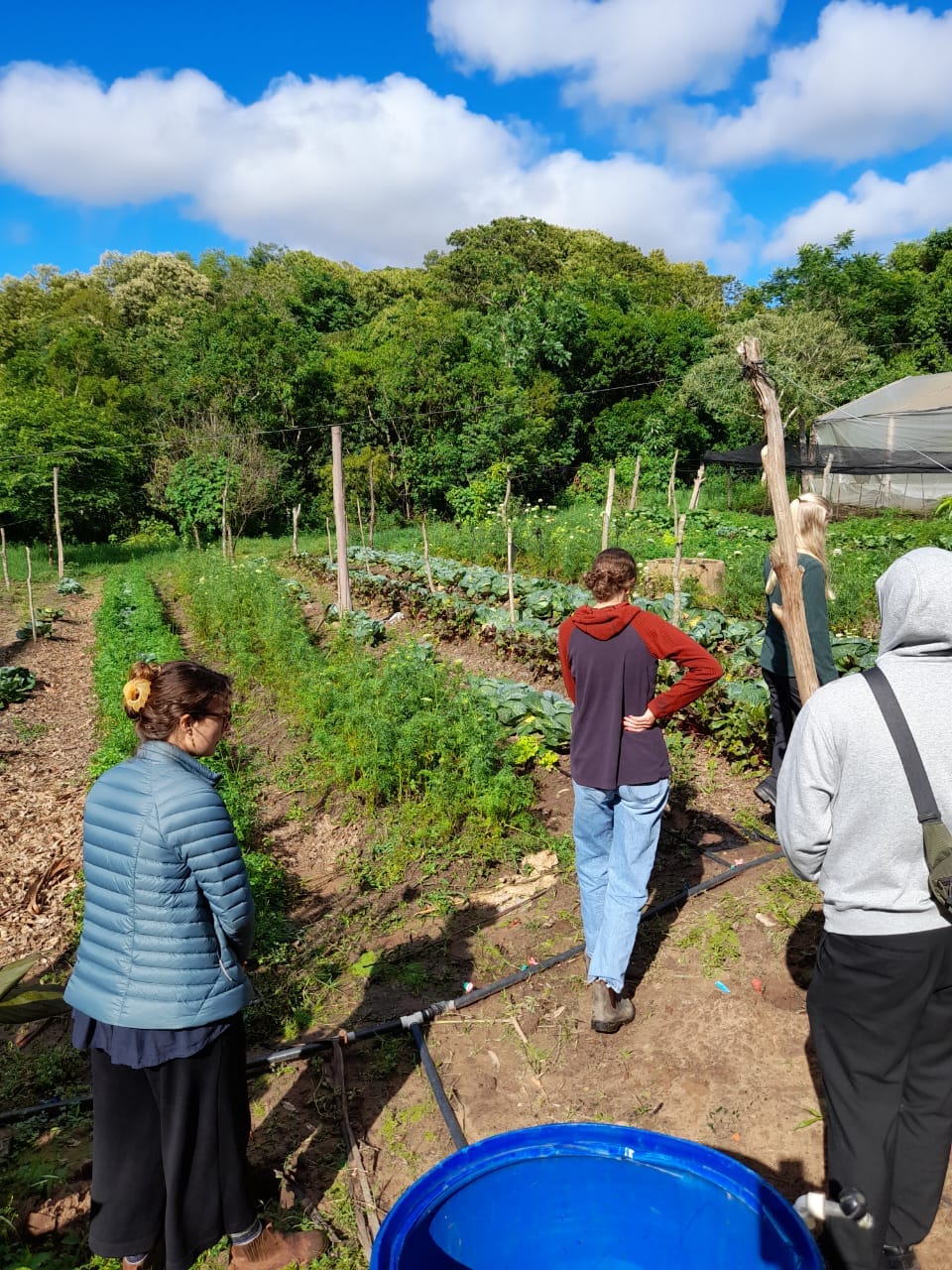
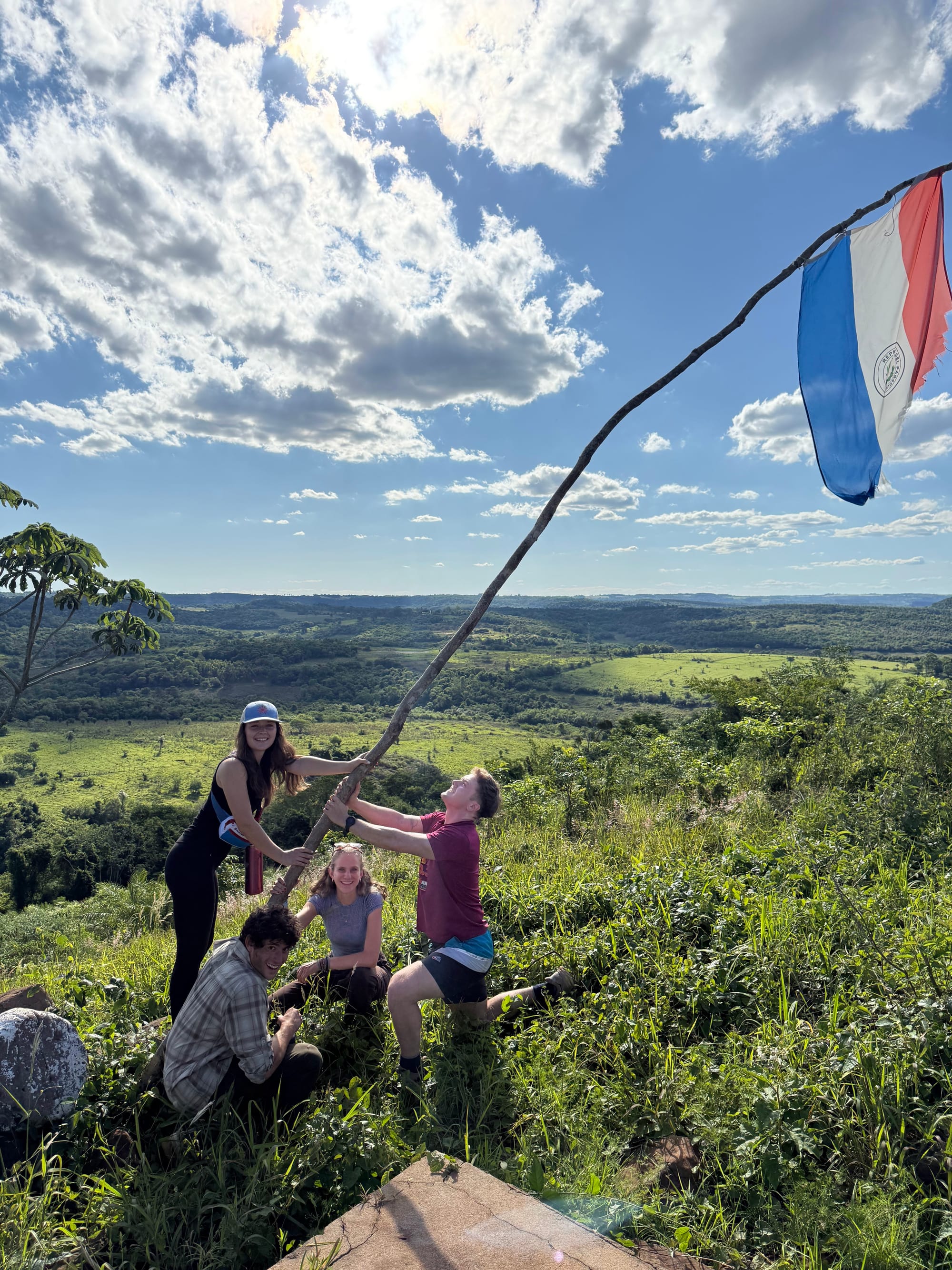
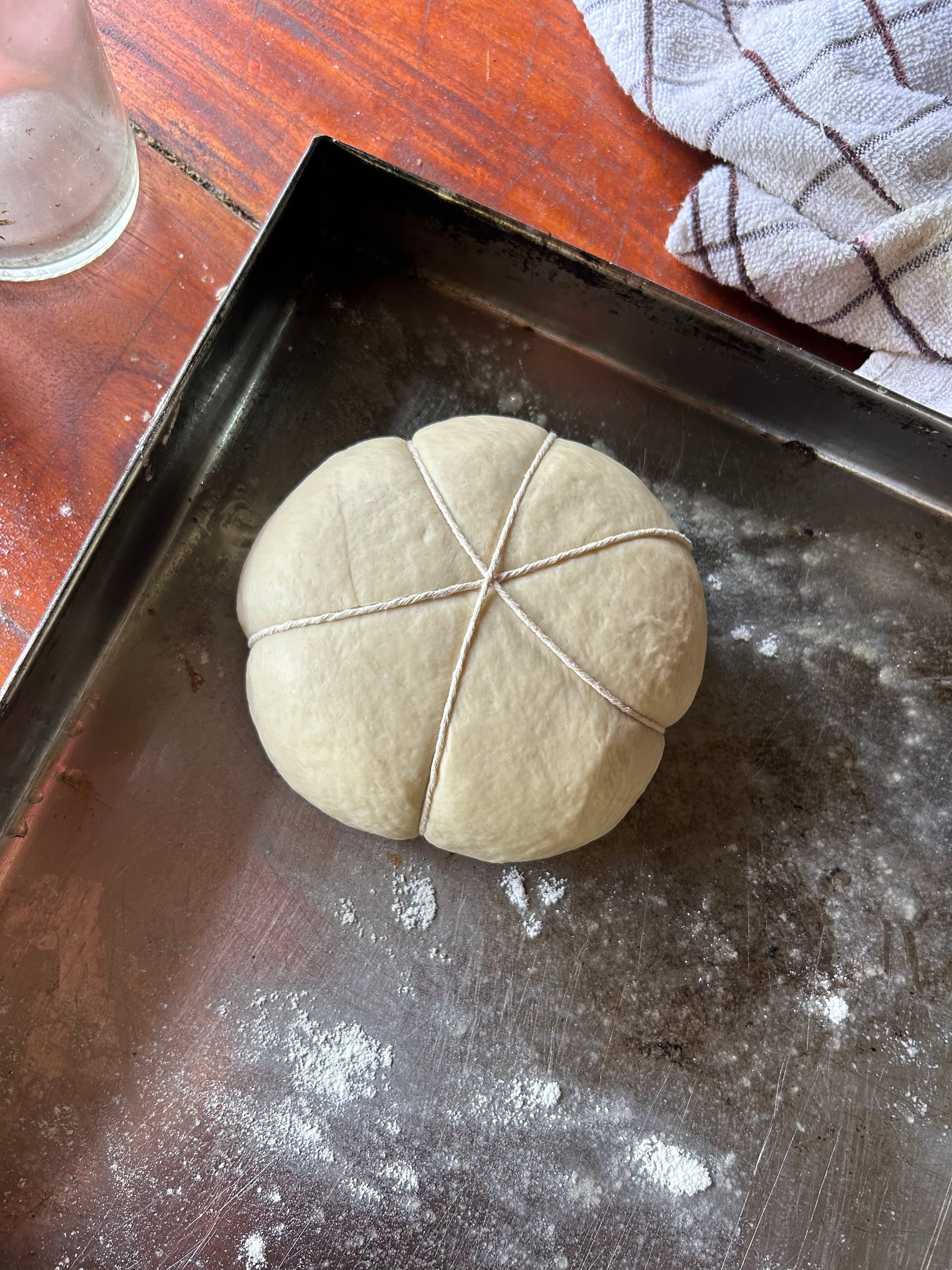
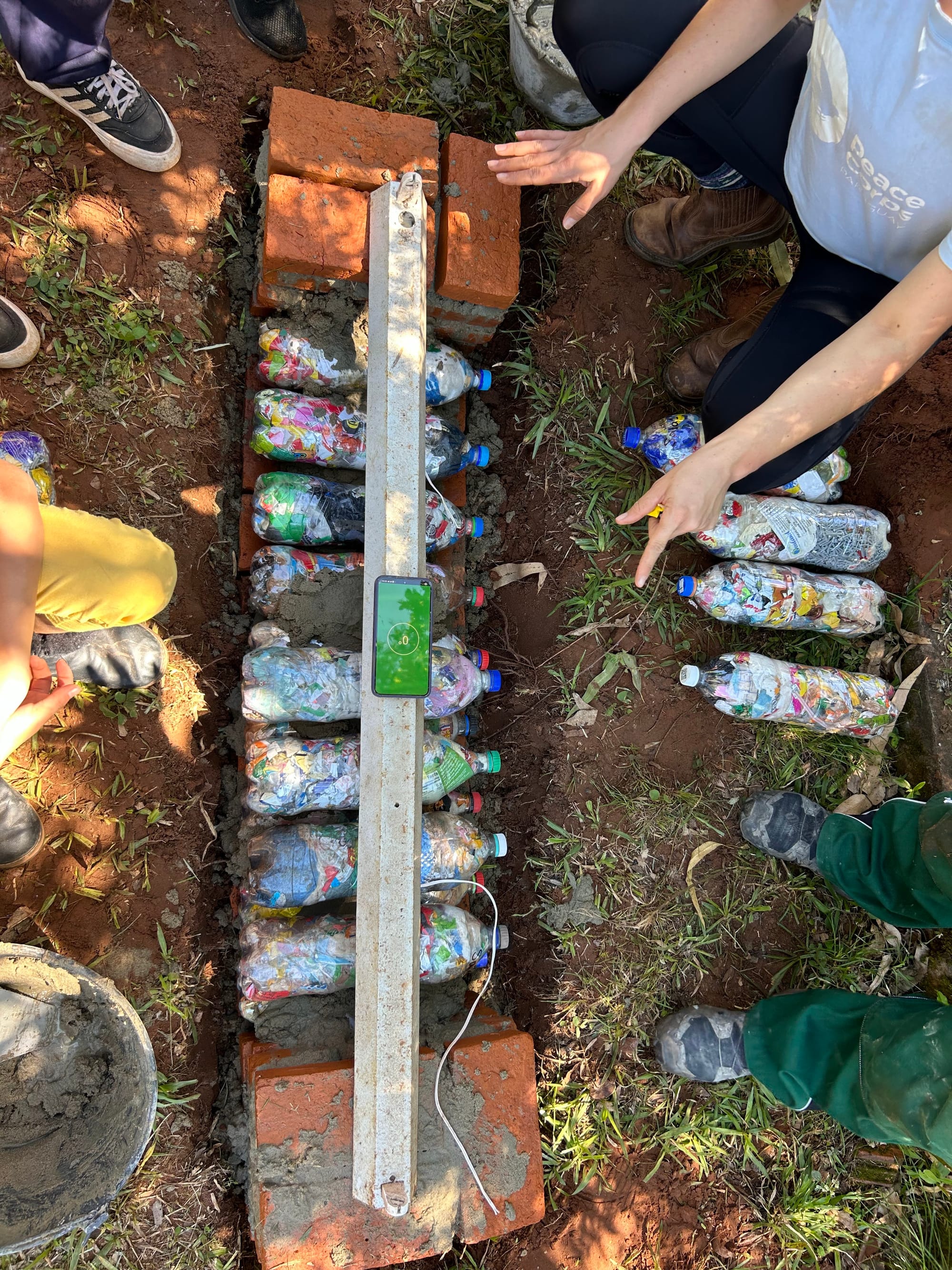
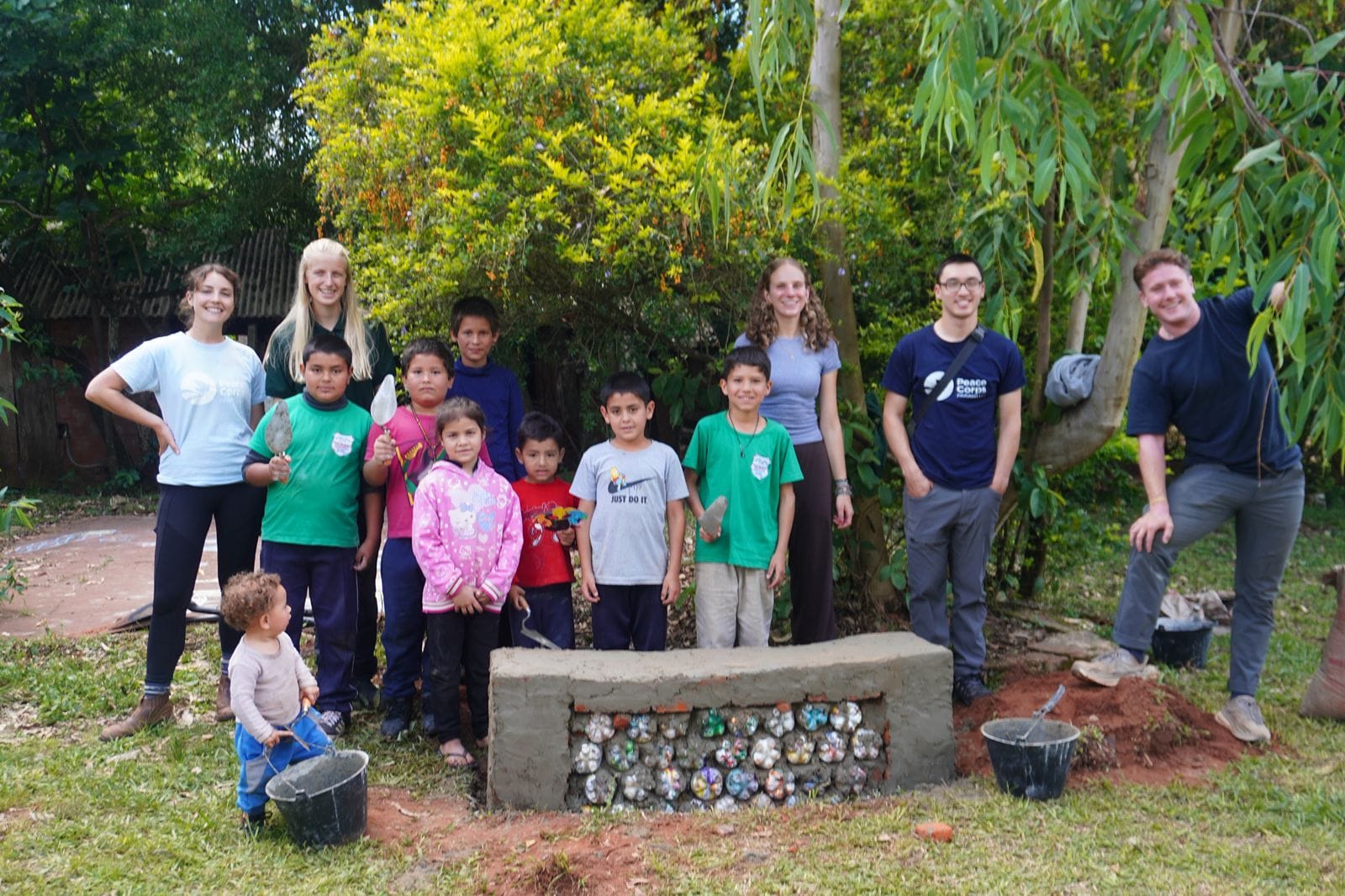
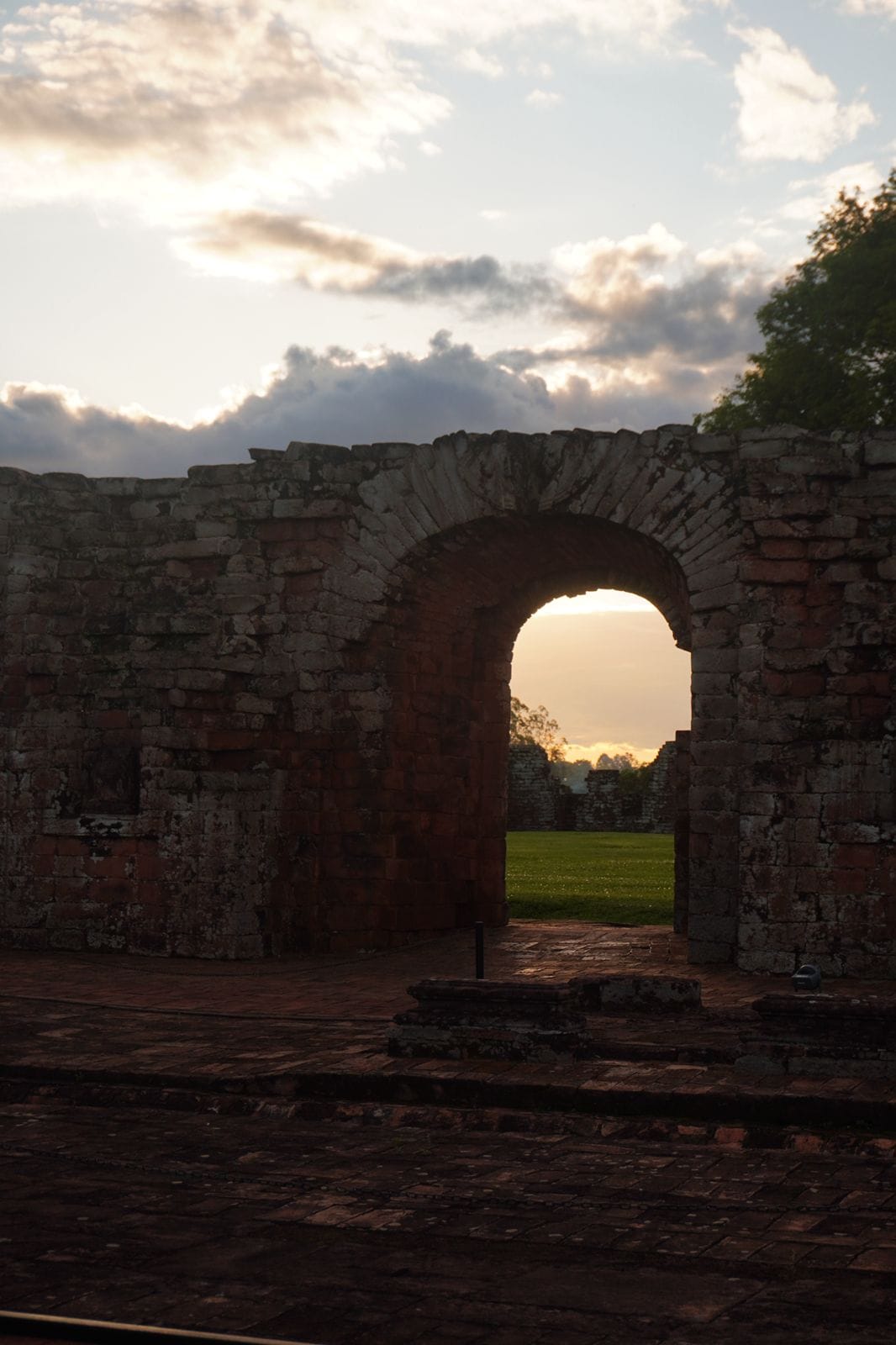
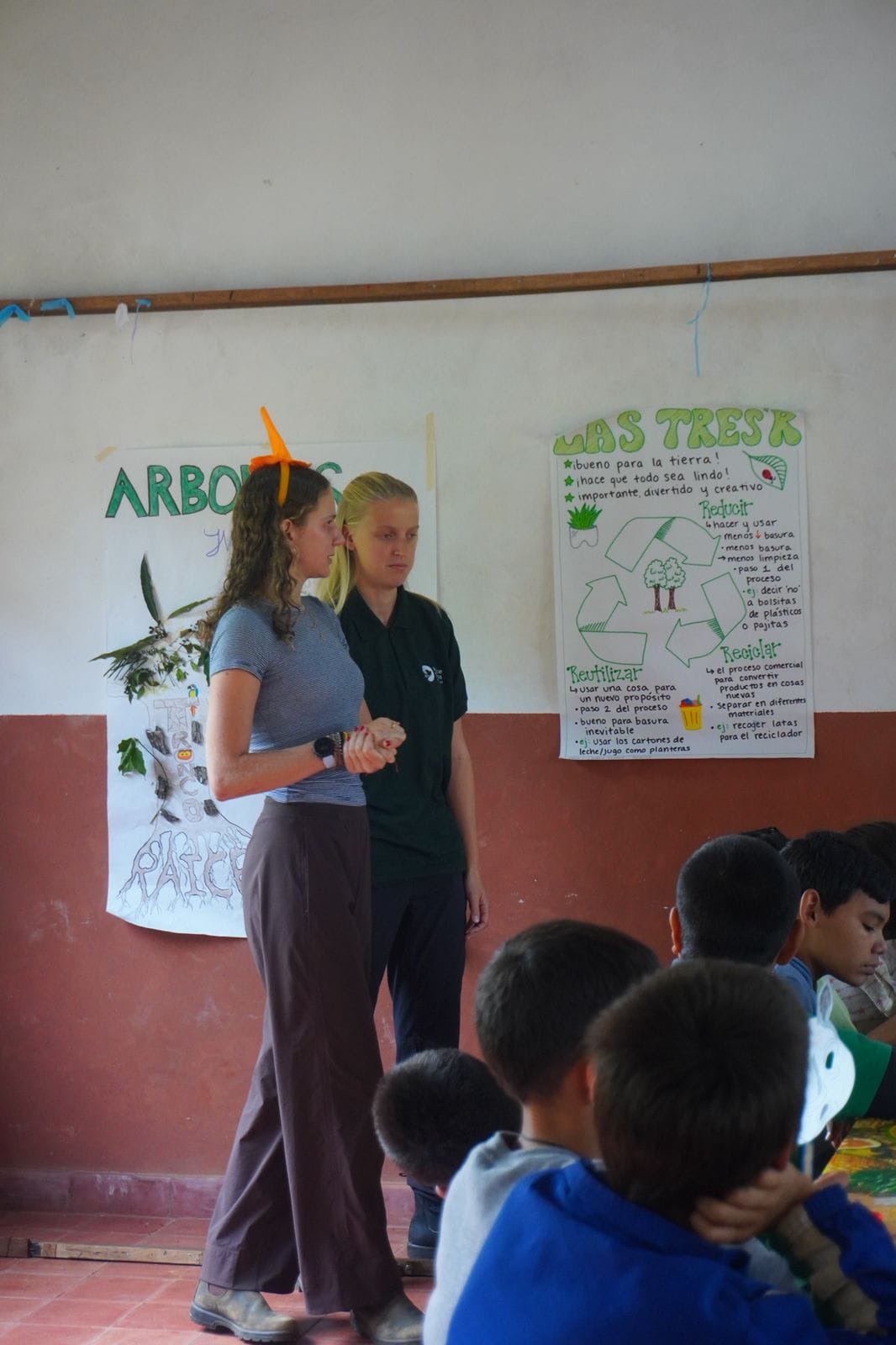
Ita Vera - the agroecological high-school, a very pretty hike, campo views, bread, eco bench making, the Jesuit ruins at sunset, and a talk about recycling on Halloween!
The morning before we received our sites, a group of us visited a town called Pirayú, about 40 minutes from Capiatá, known for it's many historical locations dating back to the Guerra Guazú (literally "big war," but in this context is the Triple Alliance War of the 1860s, in which Paraguay fought against a united Argentina, Brazil, and Uruguay, resulting in the loss of about 75% of the male population). We visited a train station that was used to transport soldiers and equipment, and a military camp that held around 15,000 people during the height of the war, but is now used for filming movies and TV shows. Pirayú is also known for ñanduti, meaning "spiderweb," which is a gorgeous form of artisanal weaving/embroidery. It was a lovely trip, and very cool to see a town with so much pride in their history.
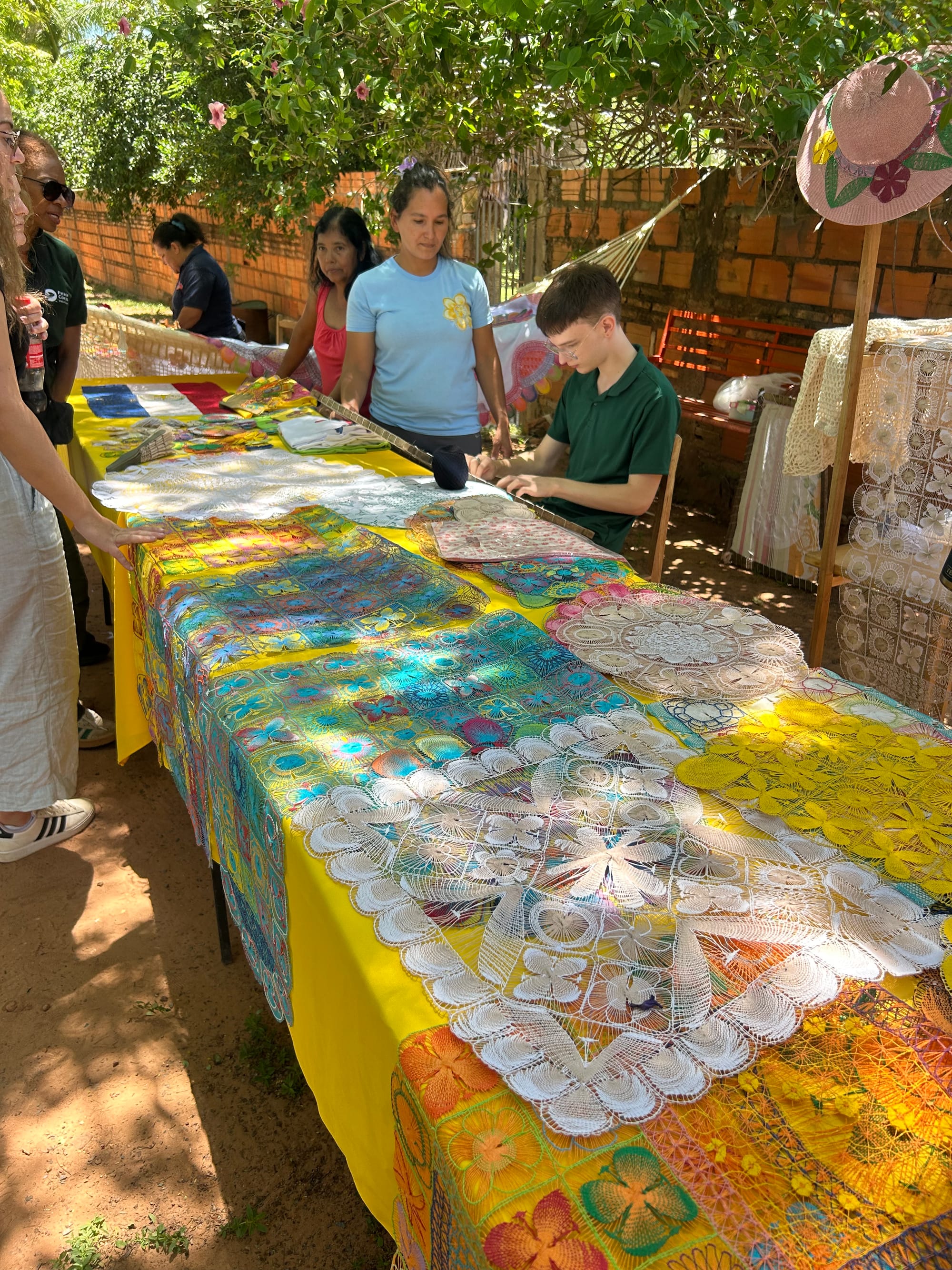
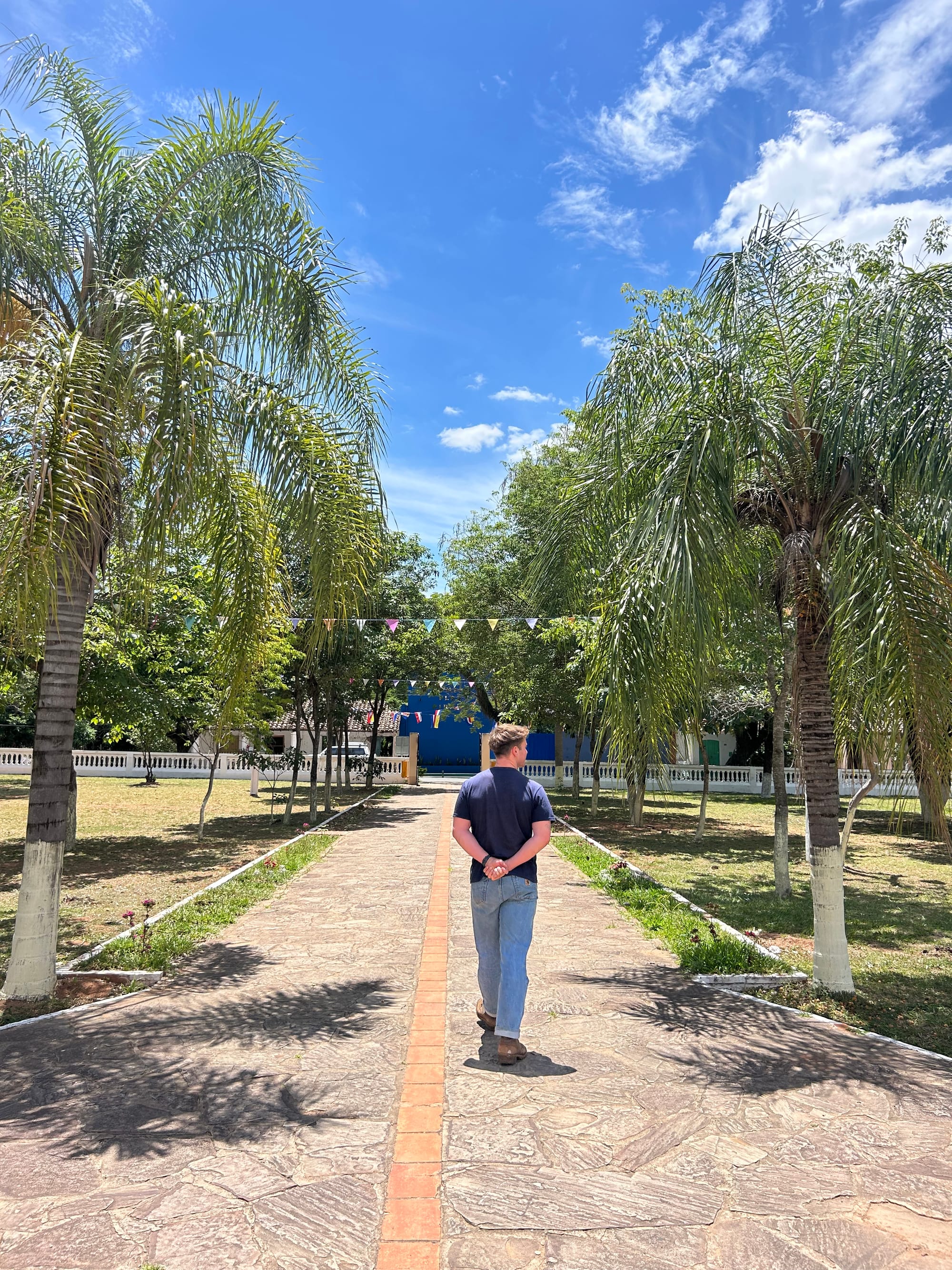
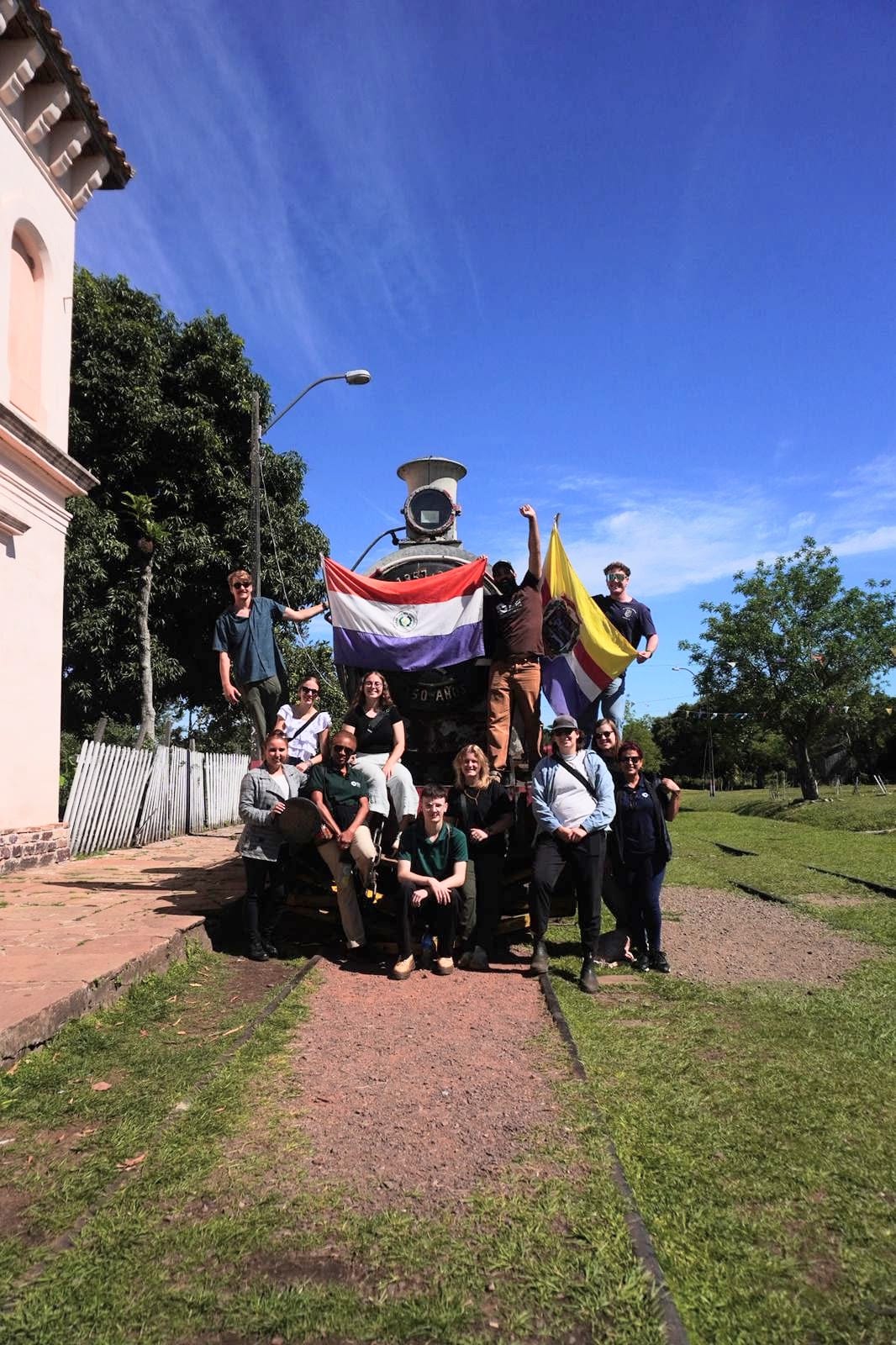
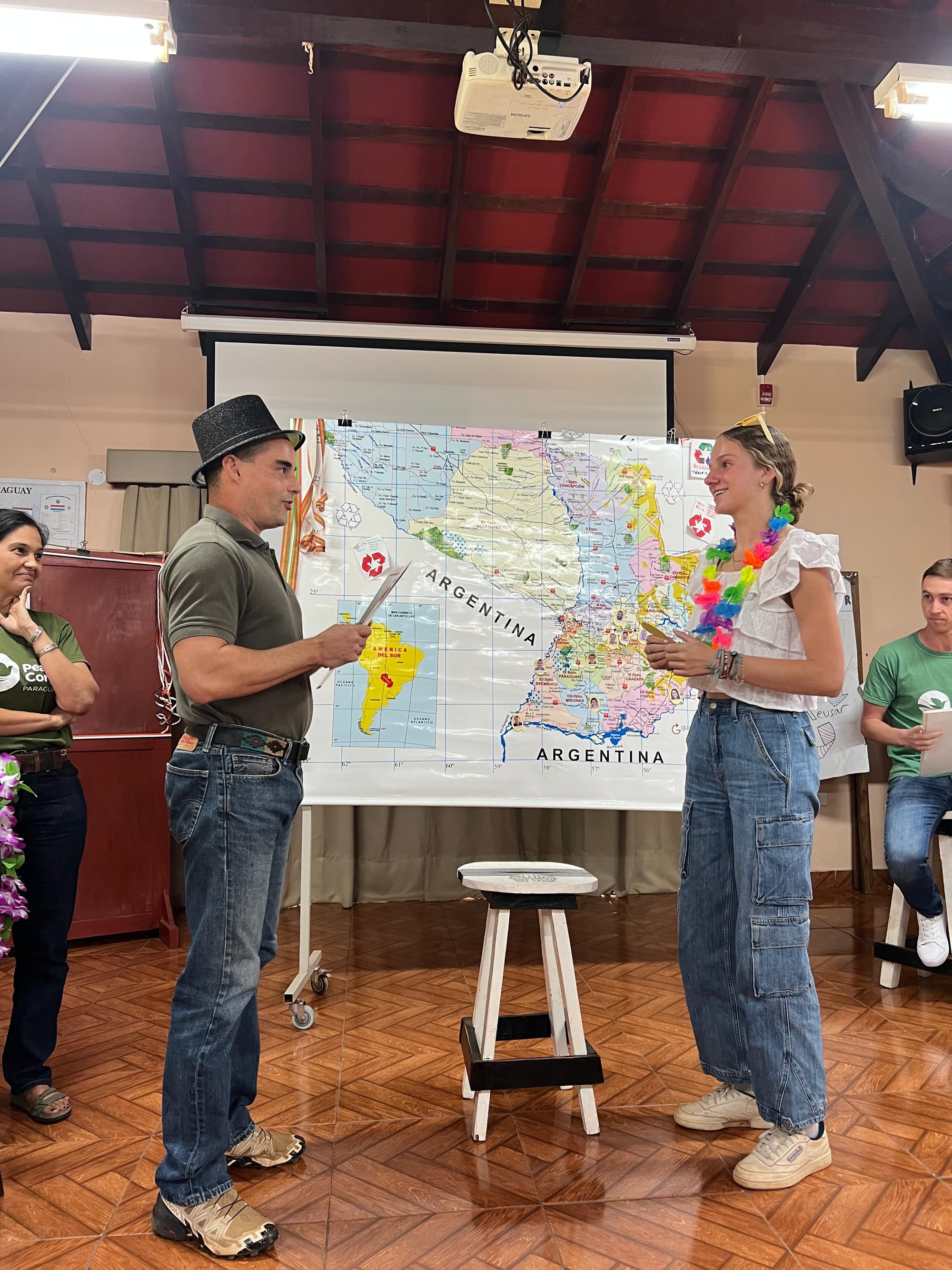
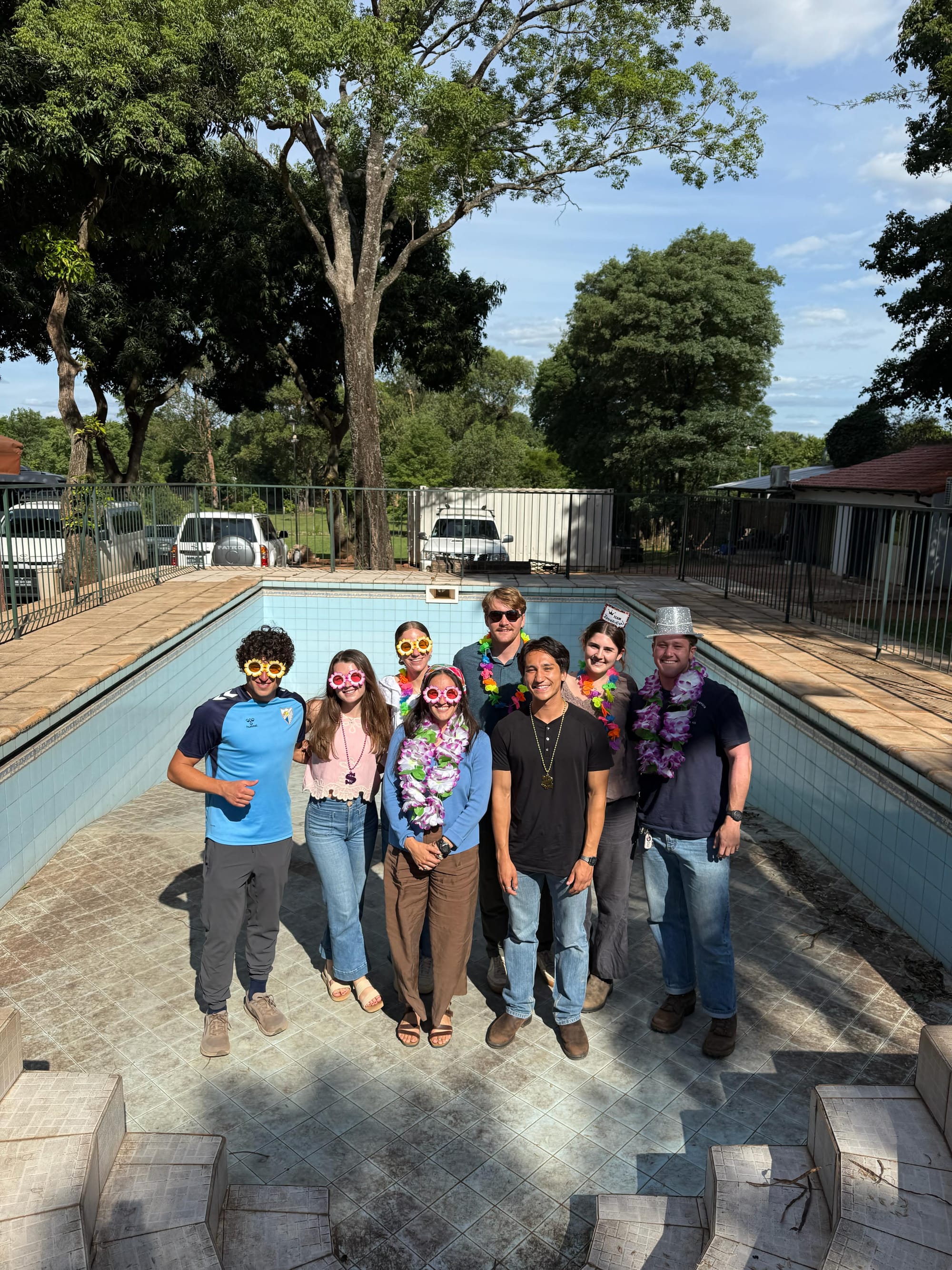
Pirayú - ñanduti, the town square, and the old train. Also site selection day - getting my site and celebrating after
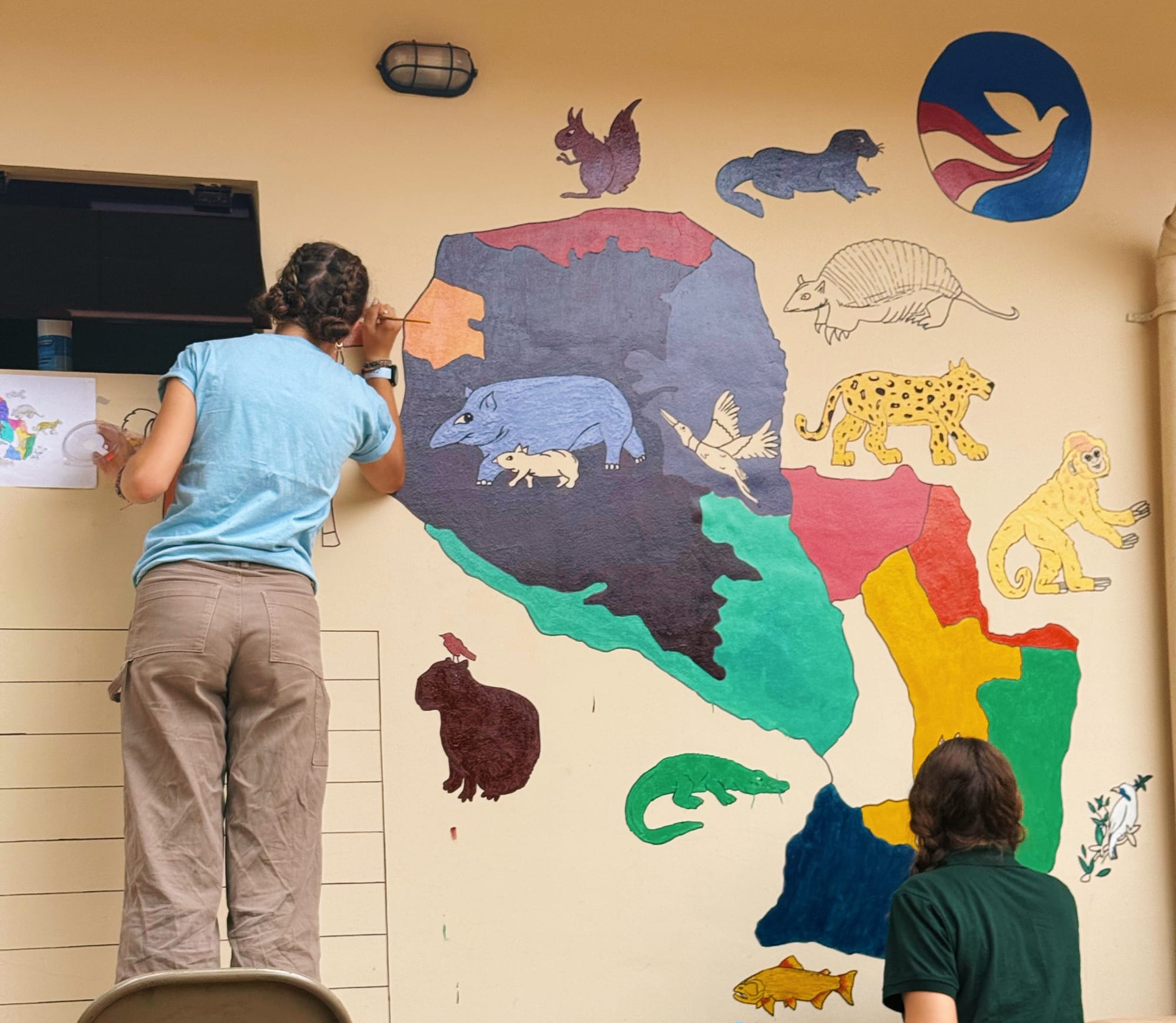
This month I also planted a tree in my community, celebrated Halloween (I was a pumpkin witch), painted two murals - one at the Costa Alegre elementary school and one at the training center, made mbeju (a traditional Paraguyan bread made with cheese and mandioca flour), and drank lots of tereré.
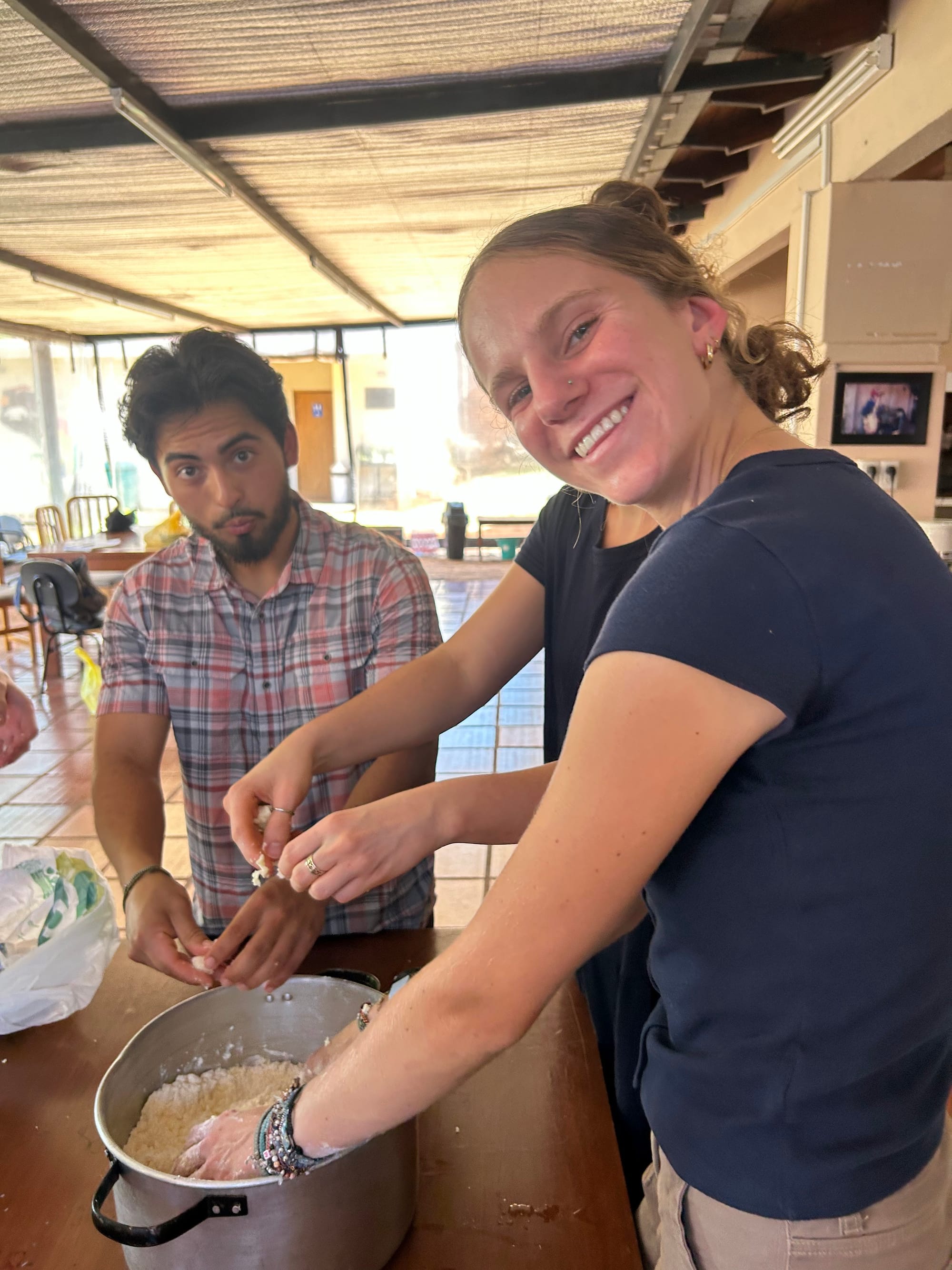
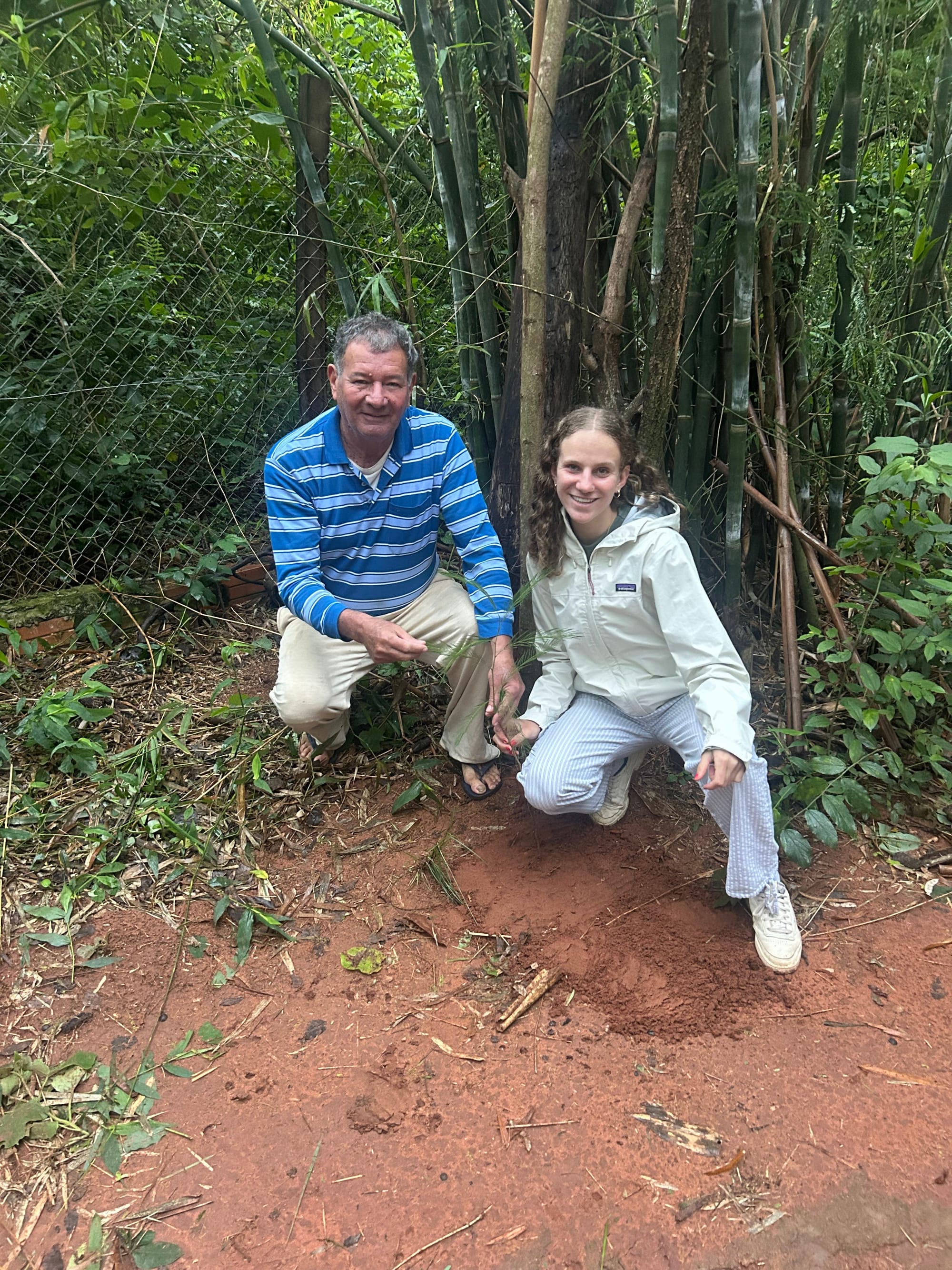
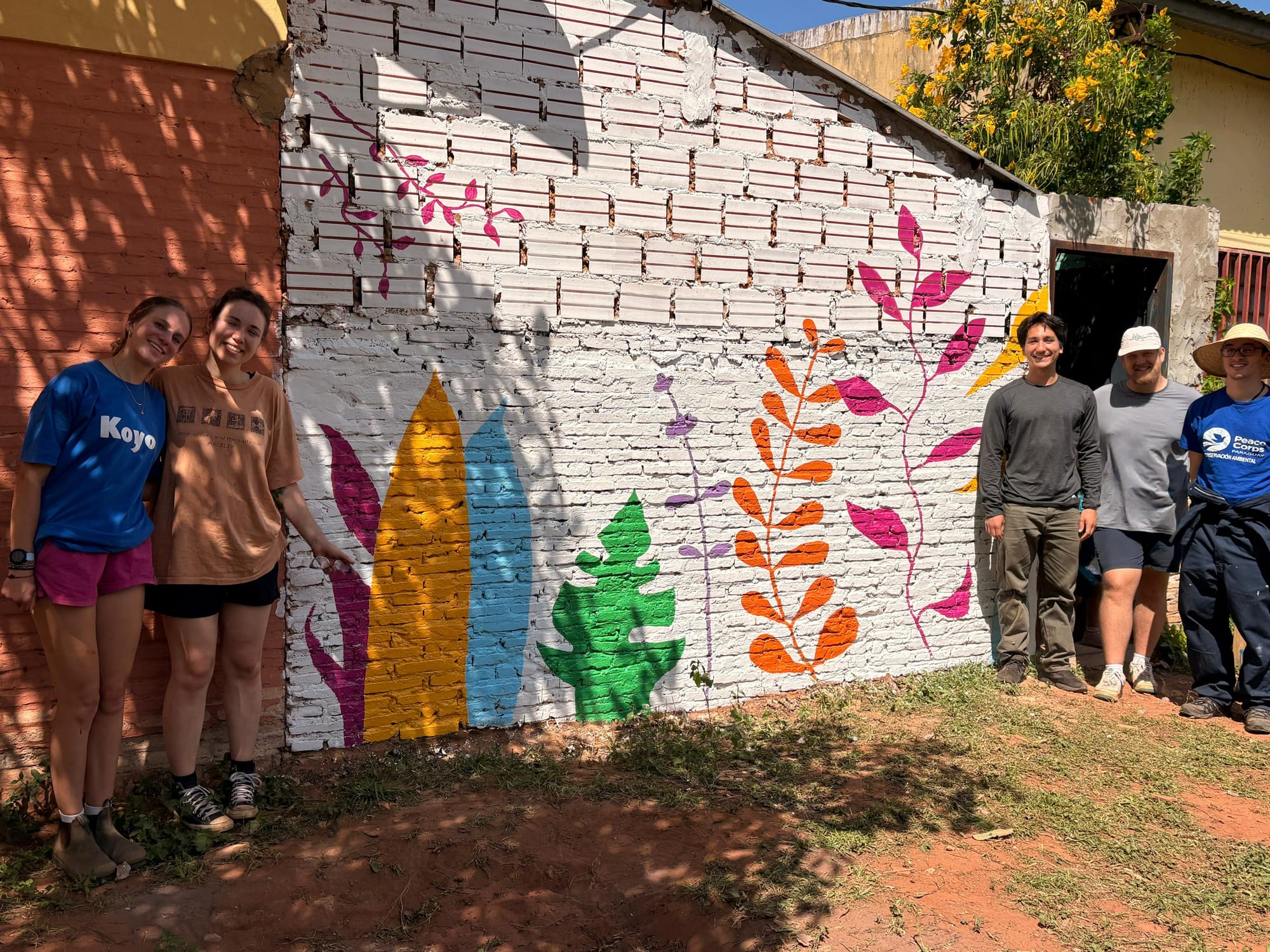
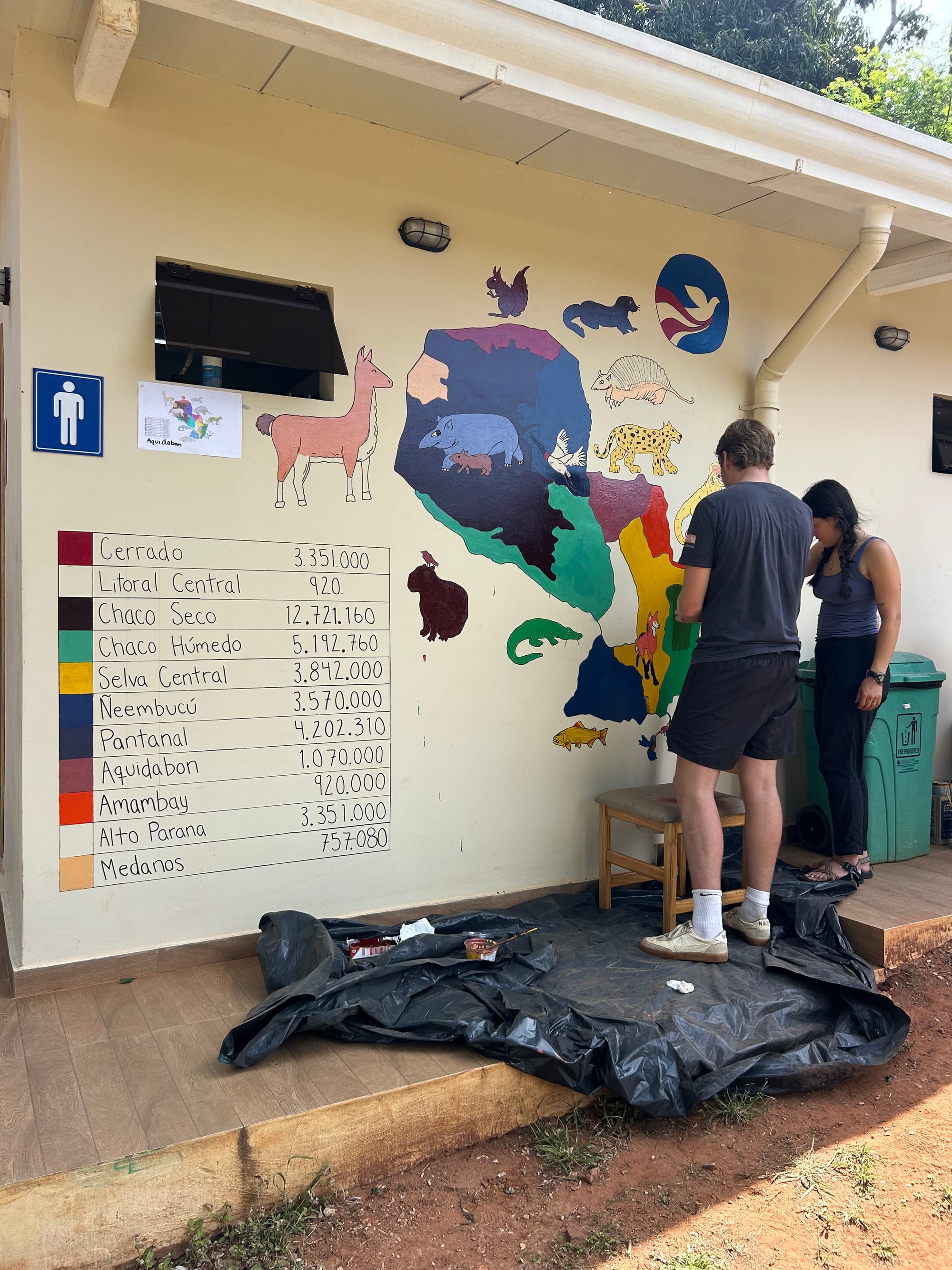
Mbeju, a baby Kurupa'y Kuru tree, a floral mural and a mural of the ecoregions of Paraguay!
And now for the main event - where I'll be living for the next two years! My site is called Mbocayaty (pronounced bo-kai-uh-too) in the department of Guairá. Guairá is the 4th department of Paraguay - there are 17 in total, and I'm honestly not sure how or why they're numbered, but I will have 2 years to uncover that mystery! The area is known for its small family farms, cerros, forested areas (including waterfalls!), and sugar cane production. I am one of 9 volunteers from my cohort who will be Guaireños, and my closest neighbor is one of my best friends here, only 7 km away. Mbocayaty is also only 7km away from the larger city of Villarrica, the capital of the department (~65k residents), and is known for encaje ju, an artisanal woven pattern. The town (pueblo) has ~6k residents, and I will be mostly working with a large elementary school, which has 350 students. This school is named after a principle there in the 1900s called Digna E. Benitez, so almost everyone in the town refers to this school as "Digna E." However, there will be opportunities to work with the municipality and the 3 other schools here - a smaller elementary school, (escuela básica), a high-school (colegio) and an elementary school/high school combo.
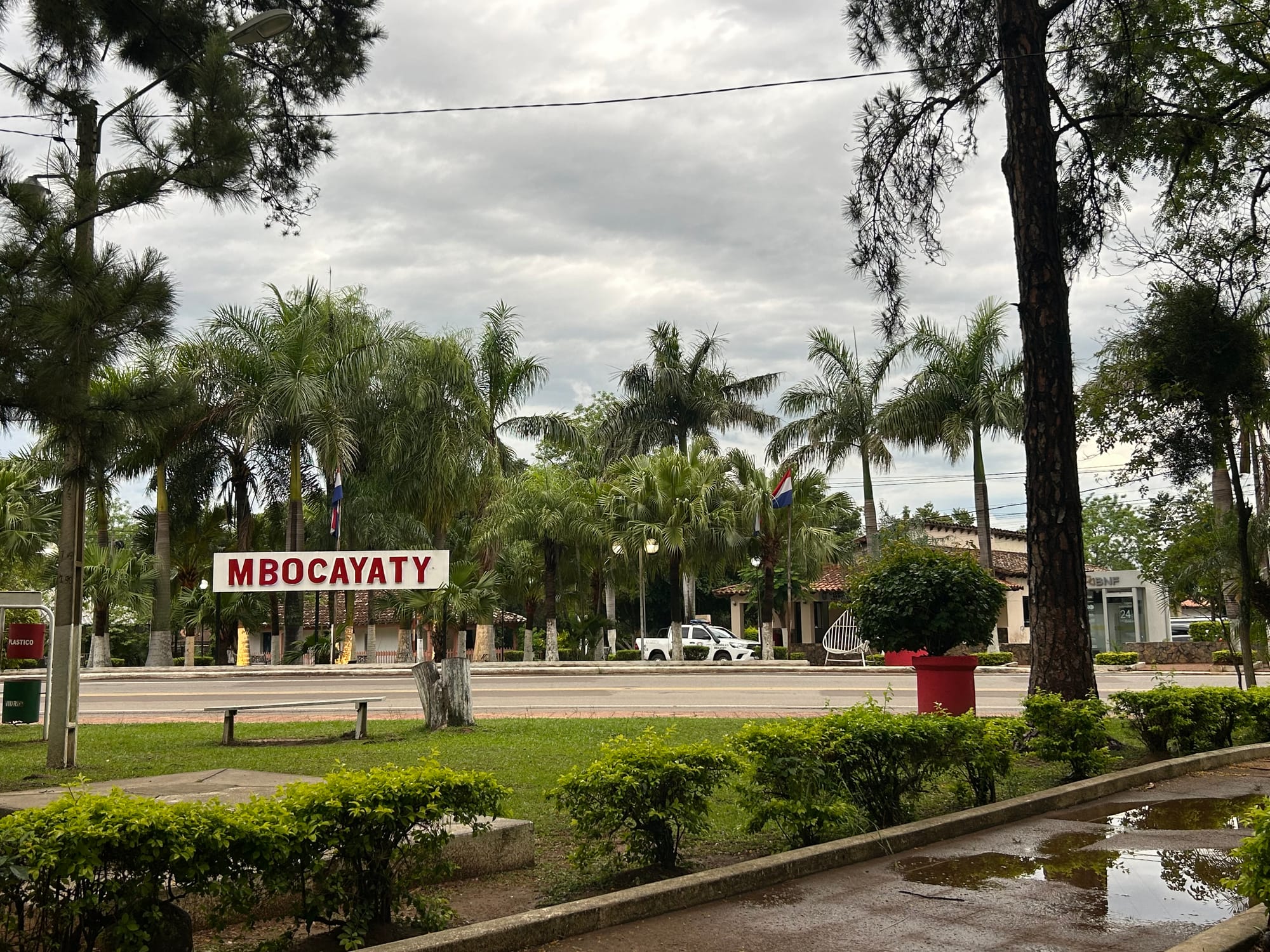
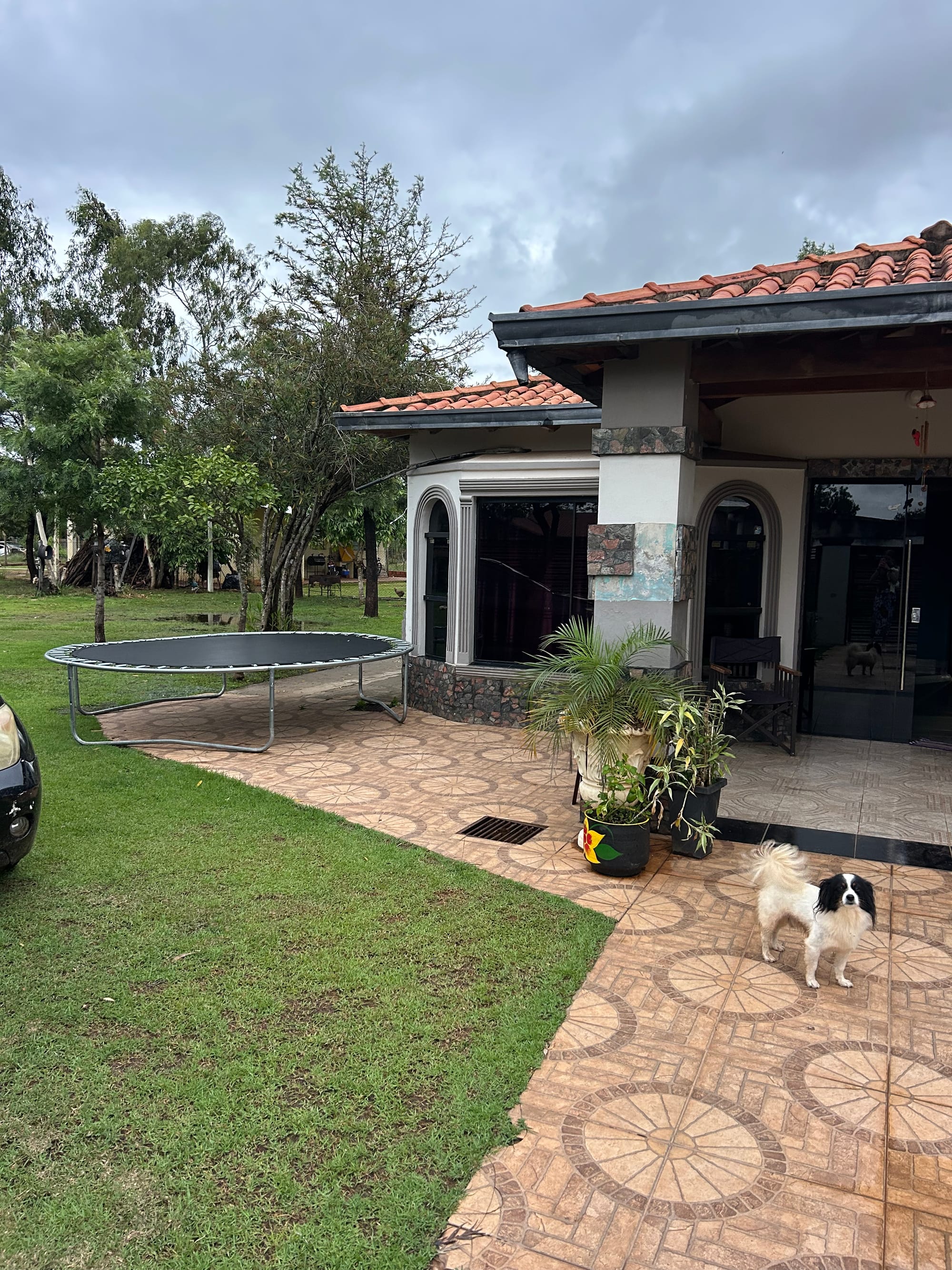
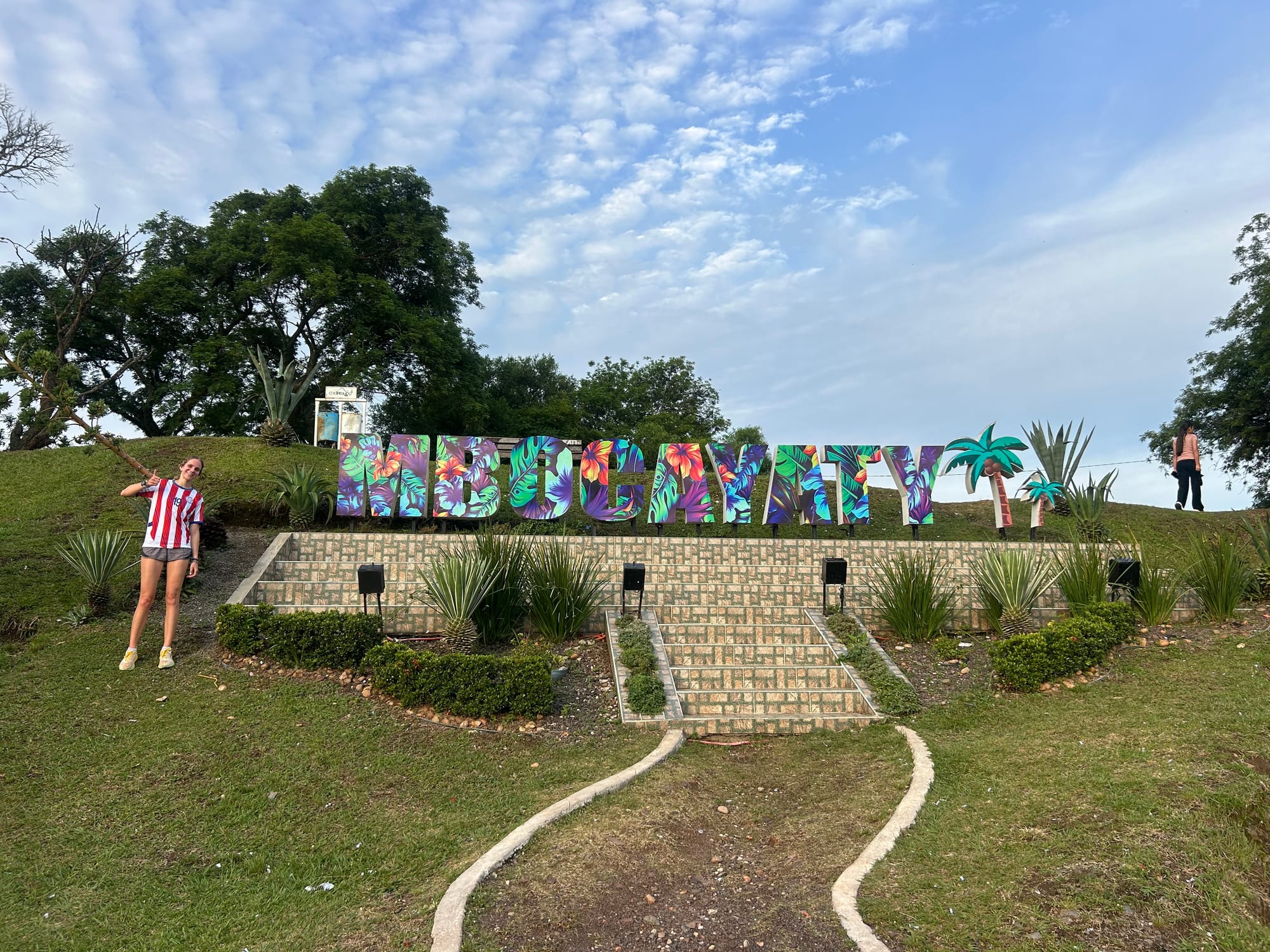
2/3 of Mbocayaty's large signs and my new house! Complete with a trampoline
Fun Fact! Mbocayaty means "plantation of coco" (Mbocayá = Coctero tree, and "-ty" = where there are many). These palm trees have small round fruits that are used to make coconut oil or are fed to livestock, and are very emblematic of Paraguay. Funnily enough, the most common tree in town is by far mango, vastly outnumbering the Cocoteros.
My site is a "follow-up," meaning that I am directly taking over the site from a volunteer who is finishing his service in December, 5 days after I arrive. Owen is part of the C-6 cohort, which was the last group to have an agriculture sector, so he mostly worked with the agricultural boarding high school a bit outside of town. Because Owen did not work closely with the community institutions in Mbocayaty proper, not many people except his students, teachers, and a few shop owners knew who he was or what he was here to do. So although I am not the first volunteer in this site, I will be the first volunteer (in a while at least) to work with the schools. That is not to say that Owen hasn't integrated here - he has had an amazing and fulfilling 2-year service, but was regretful that he didn't know more people. In a follow-up site, I was not expecting to have to explain the goals of my job, what the Peace Corps is, or my nationality, but I was happy to give the details to anyone interested. The last volunteer before Owen was in 2015, and she was from the Community Economic Development sector (CED), so mainly assisted with the small businesses and economic literacy.
Before I permanently move on December 5th, each volunteer had the chance to visit their future sites for about a week, seeing what kind of projects they would be interested in doing and getting a feel for the community. Since school will be out for summer by the time I arrive in 1.5 weeks, this was my only opportunity until February to see school in-action. It was amazing to have a tour-guide in Owen to show me his favorite spots (and running routes!), where to grocery shop and use the ATM, and, probably most importantly, gifting me his very nice bike. Some new favorite locations include the town plaza and cerrito ("little hill") - the perfect place for sunset watching. Owen's host family, who I am not staying with since they just had a baby, are the sweetest, kindest people, and I am grateful to have another "built-in" relationship ready to go when I move to site.
I also feel incredibly lucky with my site host family. They live in a larger, pretty fancy house about half a mile from the center of Mbocayaty. My host mom, Sonia (45), lives with two of her children - Iliane (12) and Victor (11) - and a nephew, Walter (27). Her oldest son, Lucas (20), lives nearby with his dad (Sonia's ex-husband), close to the motorcycle repair shop they own “downtown.” Both Victor and Iliane are students at "Digna E.," which will make for some fun overlap. The family also has a little, energetic Pomeranian-type dog named Tommy and a strange cat named Princesa.
Sonia works in two schools. In the mornings she’s the directora (principal) of the small elementary school near our house, and in the afternoons she works as a docente at "Digna E.," which, while translating directly to "teacher" doesn’t mean she teaches classes, but rather handles more behind-the-scenes administrative work. Schools in Paraguay function a bit differently than in the U.S.: students attend only half a day, either in the turno mañana or turno tarde. Sonia is clearly respected - everyone she greets (or honks at) calls out “¡Hola profe!" I’ll be staying with my host family for the first two months, after which I’ll have the chance to find (and move into) independent housing.
My official counterpart is the directora of "Digna E." She is incredibly hard-working and very excited to have a Peace Corps volunteer. I was introduced to the turno tarde students and also attended a kindergarten graduation ceremony, which was probably the cutest thing ever. The "kinders" each presented a made-up story about fruits and/or veggies, since their curriculum this year had focused on healthy eating habits and after, the parents prepared a delicious potluck of fruit-centered treats.
The highlight of my trip was a definitely a walk I took with my host cousin Walter. He wanted to show me the town "catéura" (landfill), and spent much of the 3 miles identifying and telling me about native Paraguayan trees, which I am trying to learn and recognize. Tommy the dog didn't want to be left behind, so he joined too. We made it about halfway to Yataity (my friend Ziggy's site) then turned around, but the weather took a turn for the worse. The winds picked up, and within minutes, turned into a torrential downpour. We took shelter with 2 others escaping the rain under the roof of a bodega on the side of the highway, and waited for my (ex) host dad to pick us up. My host mom was very concerned that we were outside during a tormenta, and when we got home - a bit wetter and colder - my bedroom had about an inch of water due to a leak in the wall. But after some mopping, a hot shower, and a dinner of sweet bread and hot chocolate, all was well. Quite the adventurous day!
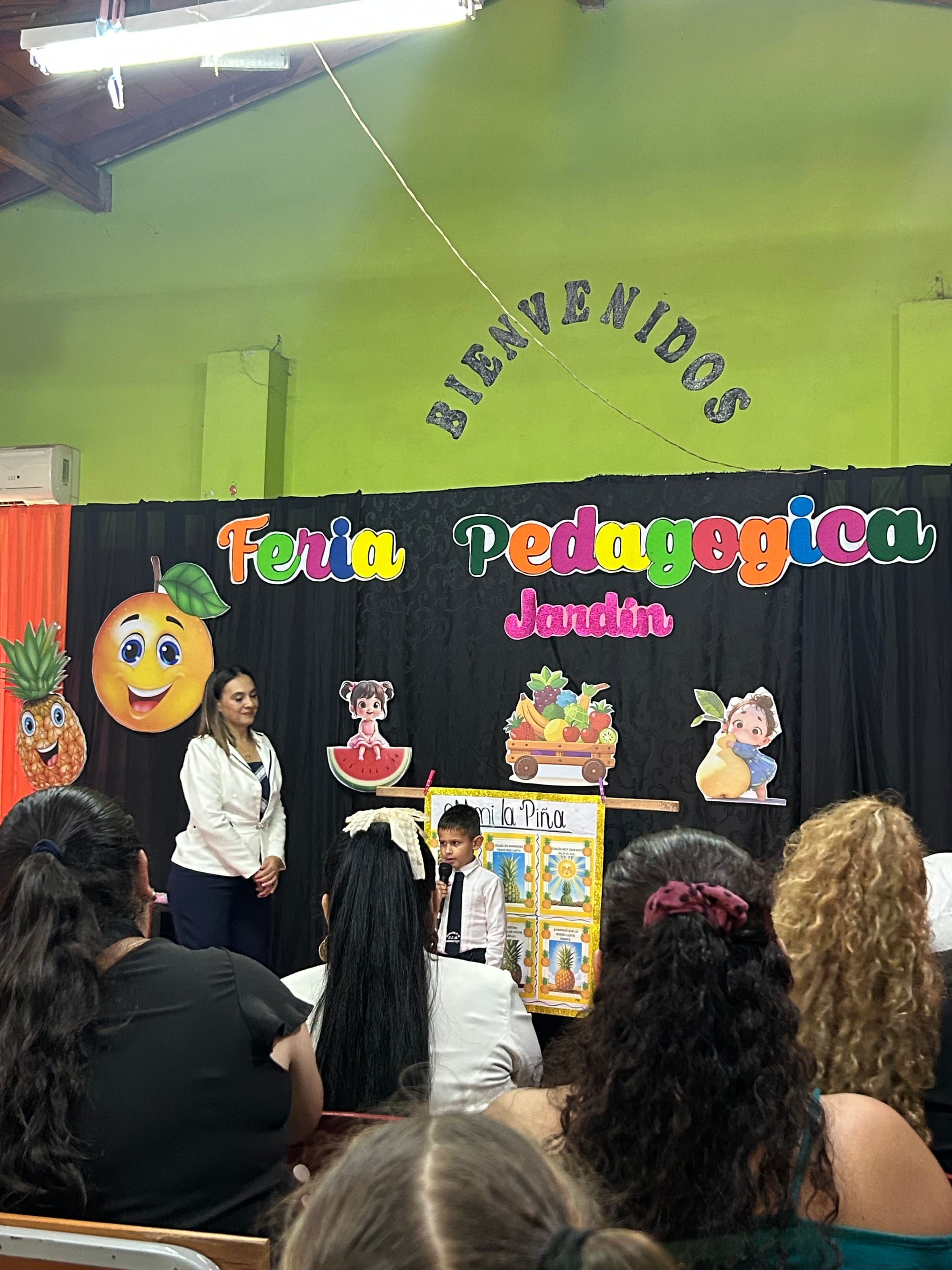
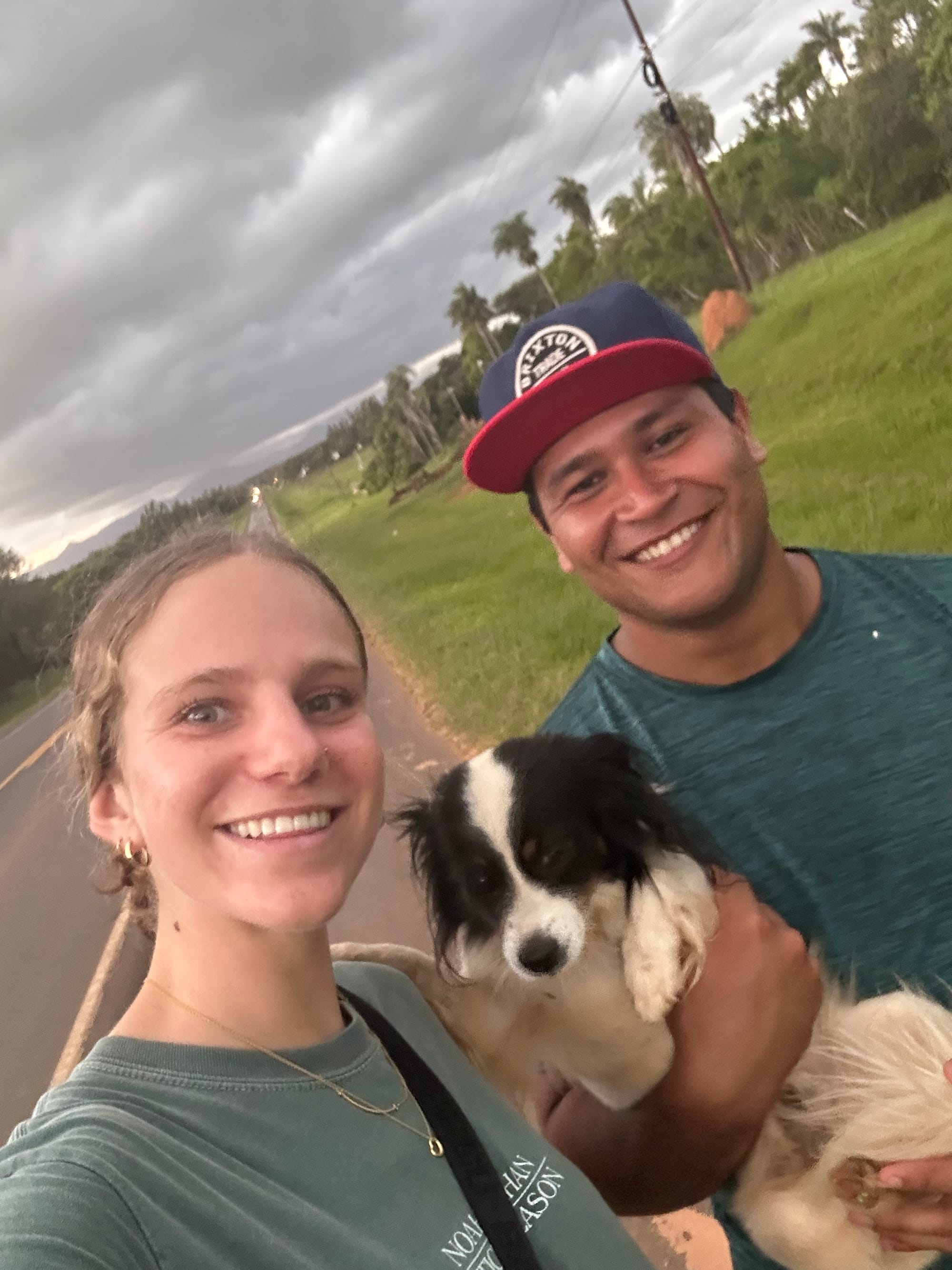
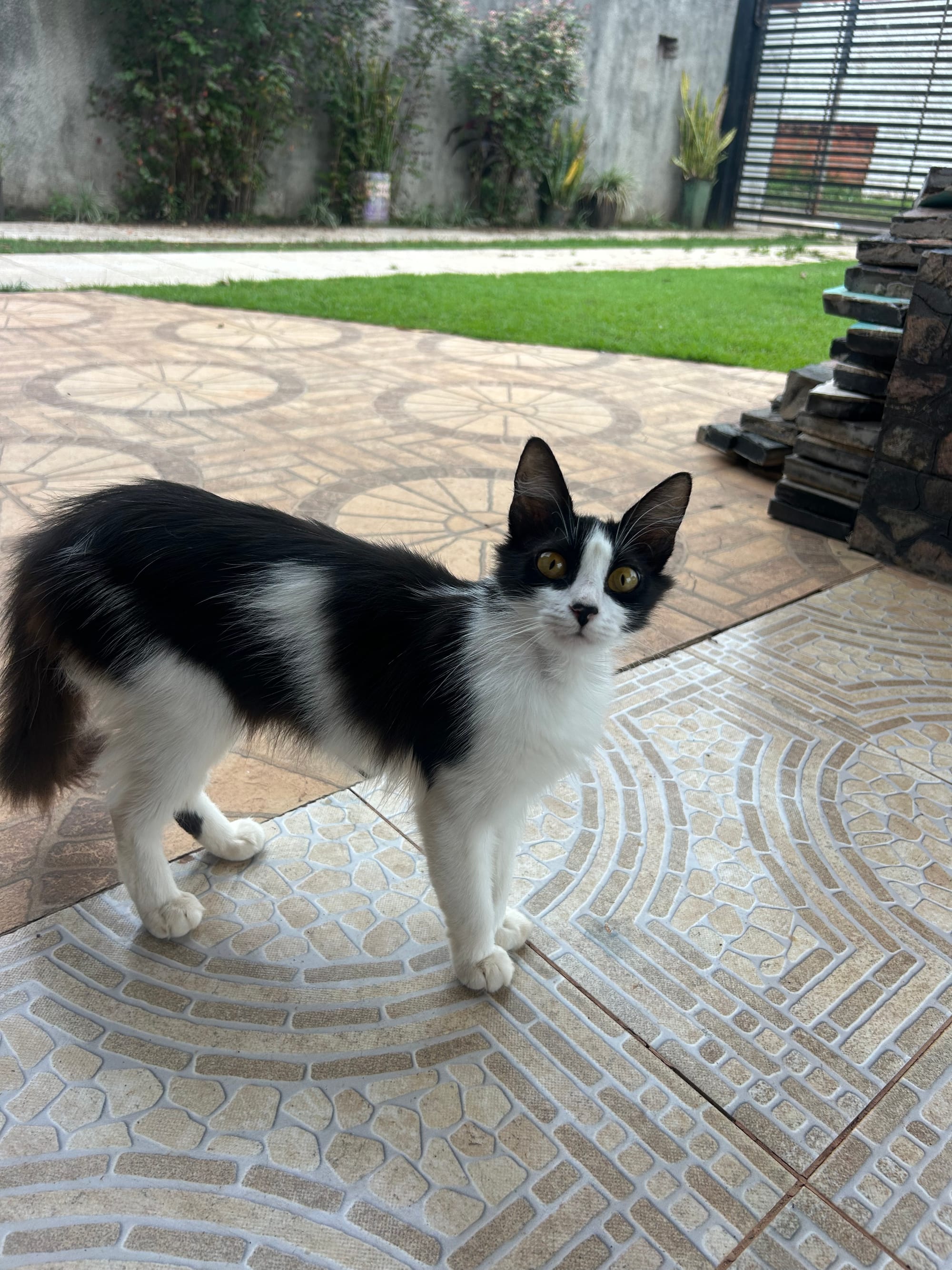
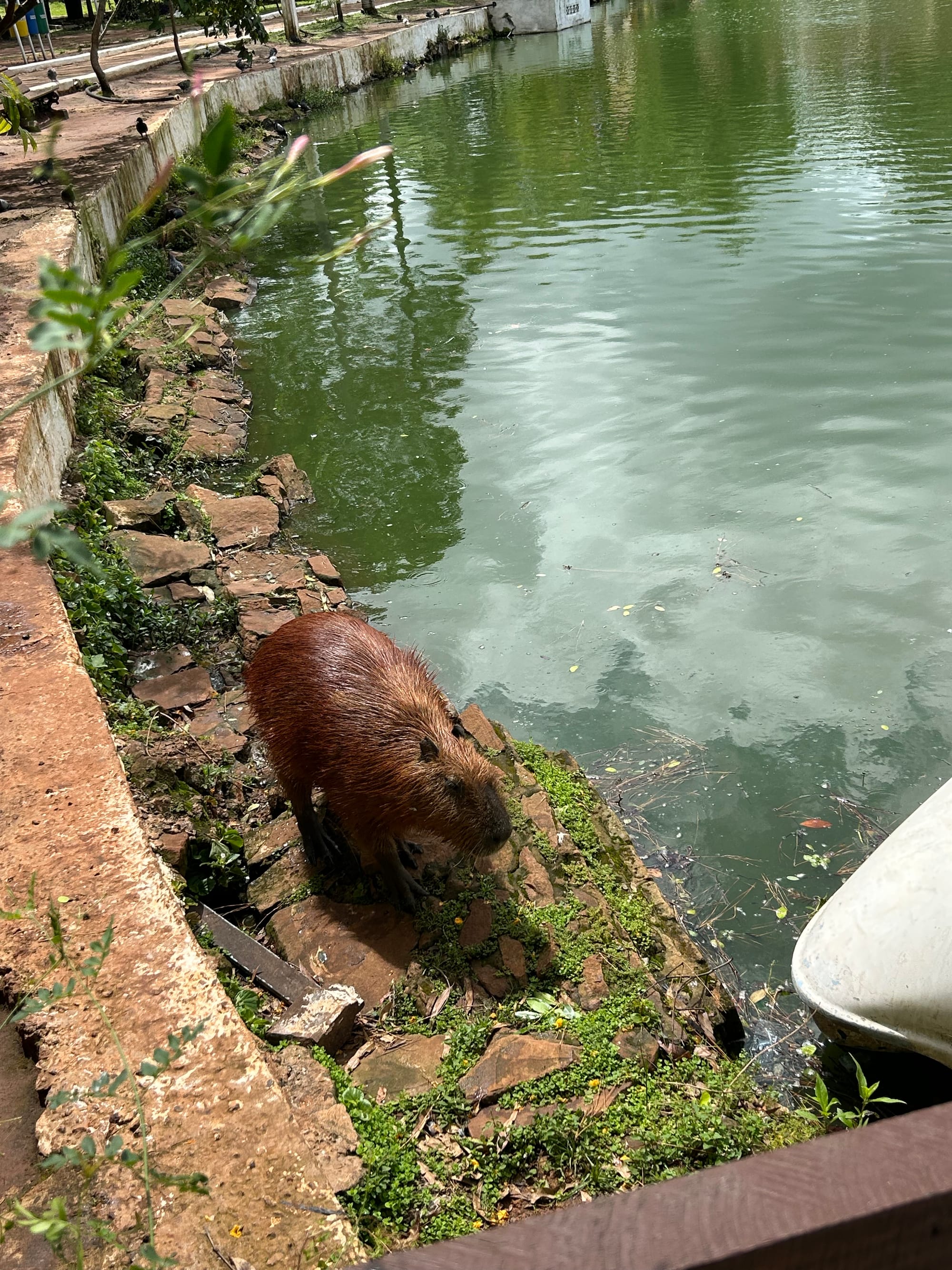
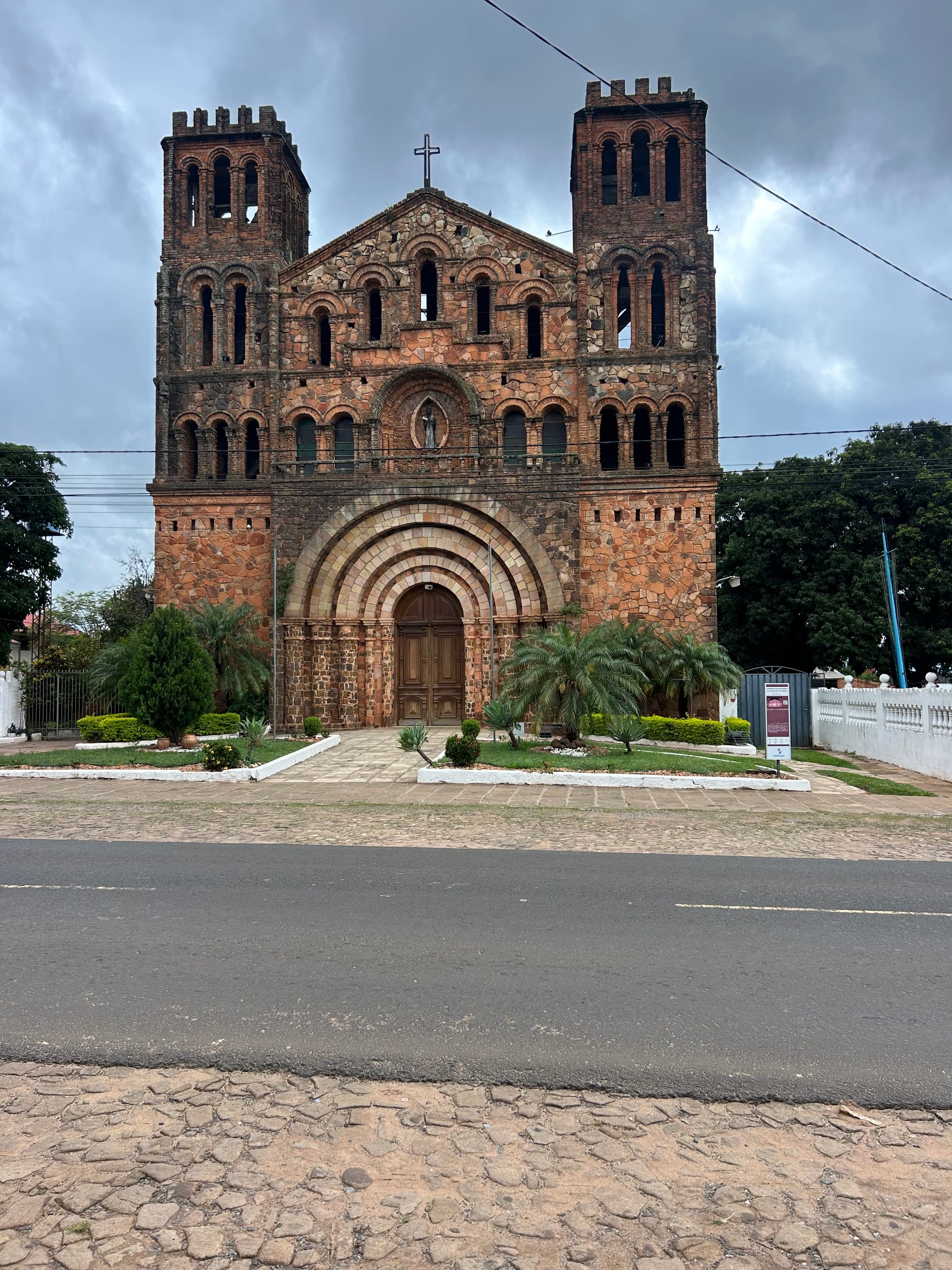
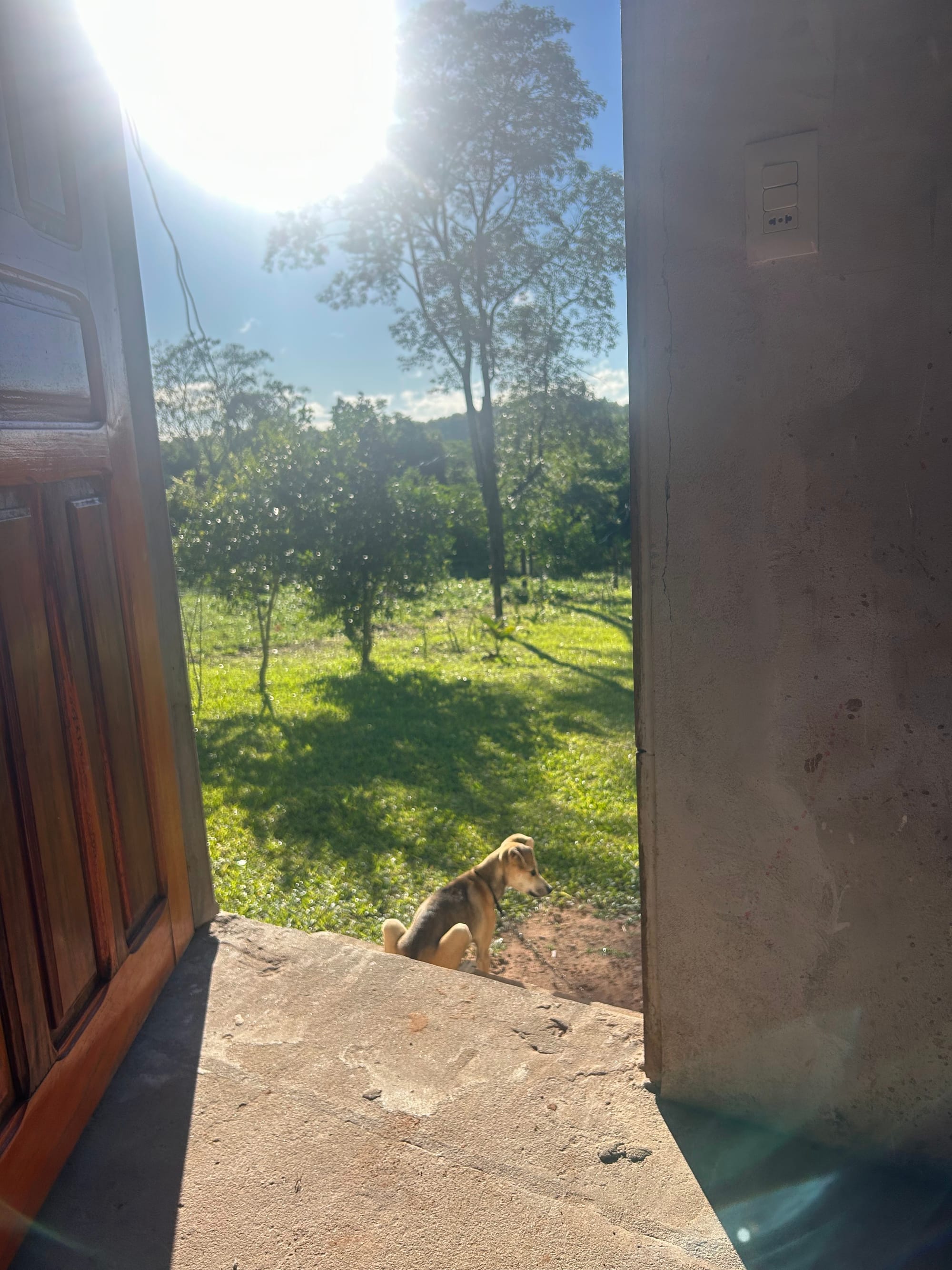
Kindergarten graduation, on a walk with Walter and Tommy, Princesa the cat, capybaras and a cool old church in Villarrica!
Fun Fact! Catéura is the proper name of the giant landfill used by the capital city of Asunción, but is now also used to talk about all landfills (the same way Band-Aid (a brand) is now used to describe all canvas bandages). The actual word in Spanish for landfill is vertedero
The weekend after I returned from my site visit, my host family in Costa Alegre hosted a cow head barbecue as a goodbye party for the volunteer from C-6 who stayed with them when she was in training two years ago. I invited my friends, who brought delicious salads and dips, and we all tried cow head for the first time. Although it sounds strange, the "normal" parts of the head (i.e. not the brains or tongue) were extremely tender and yummy since the head had been cooking "low and slow" for 5 hours. Elva, my host mom, loves to eat the brain and was very adamant that I try some too. It tasted like fatty pâté, and I do not think I will be eating brains again. The whole day was very sweet, and probably one of the funnest days I've had here in Paraguay so far!
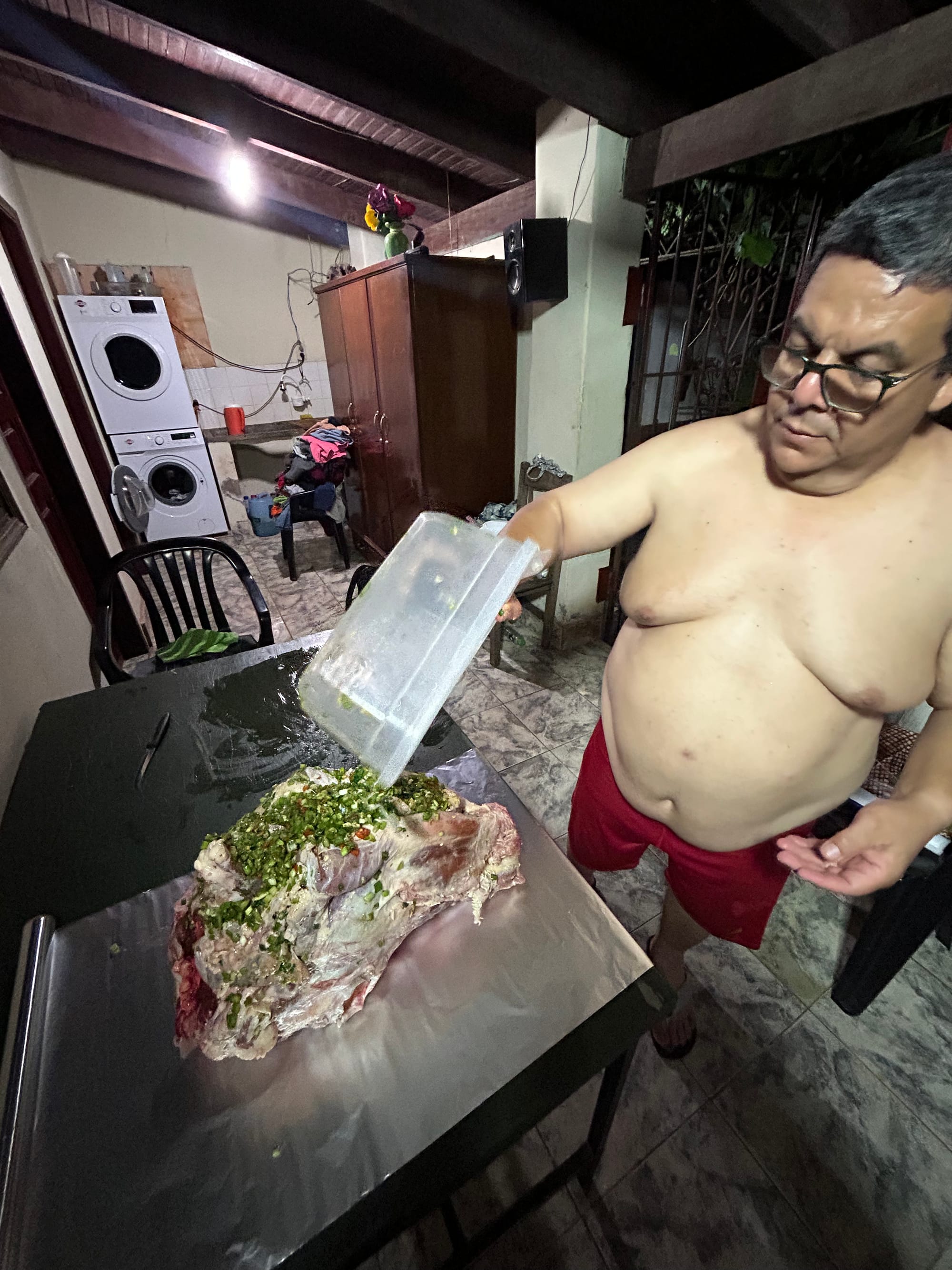
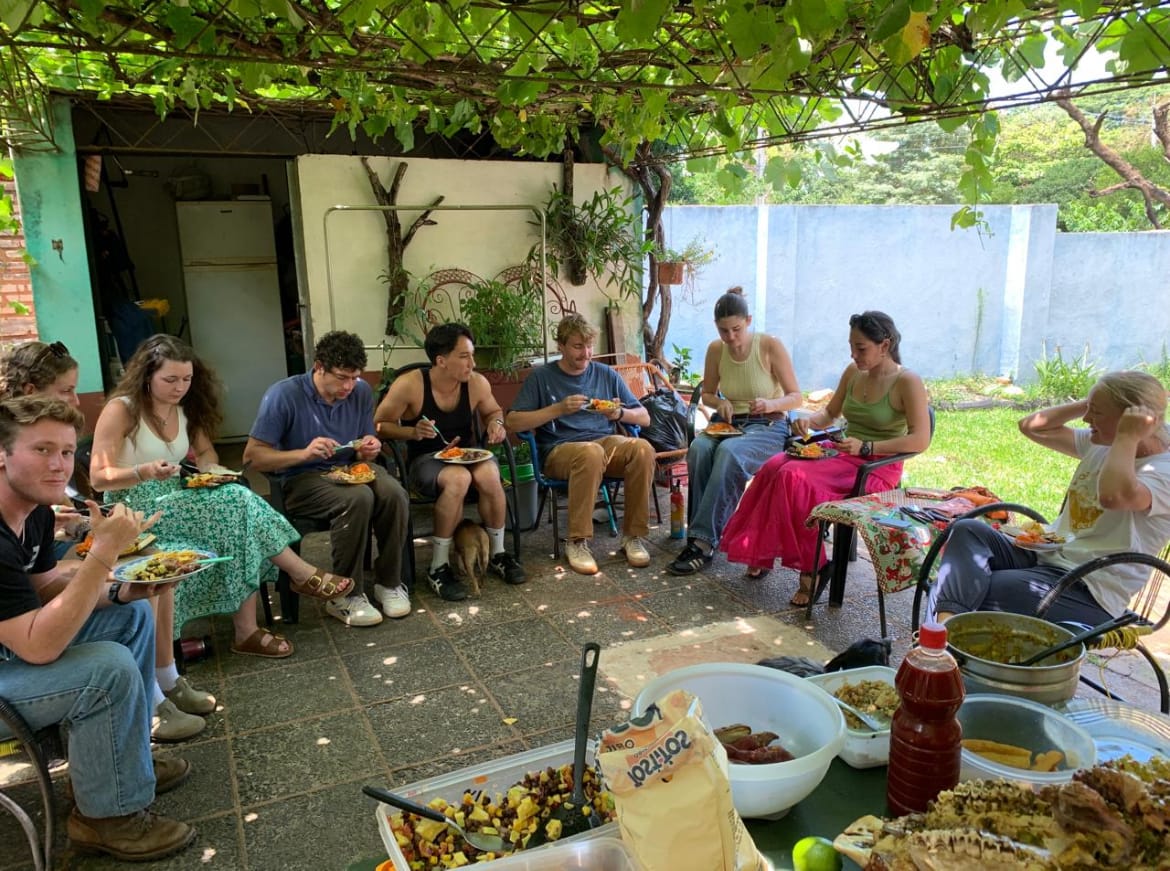
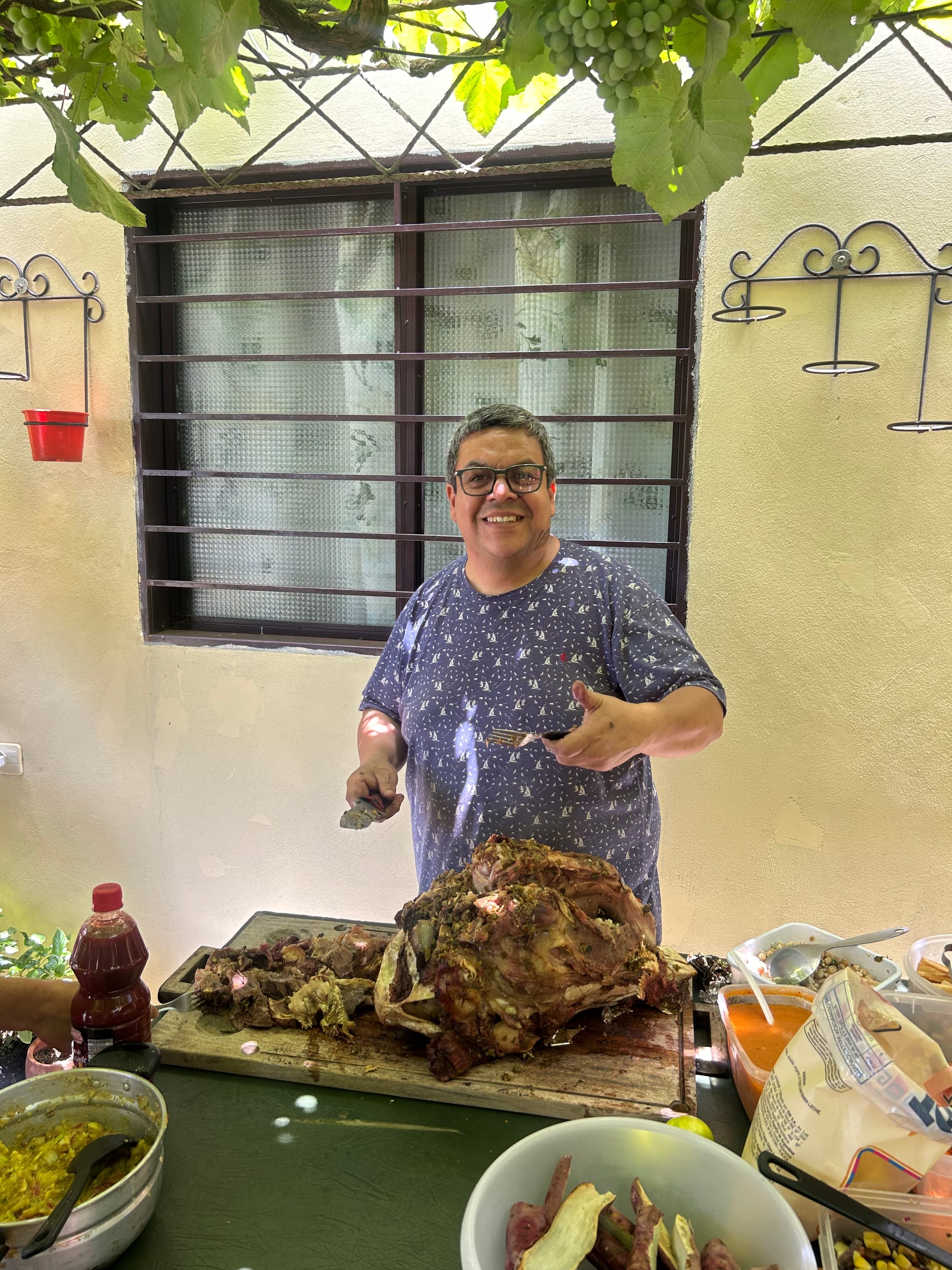
Vicente and his cow head (very proud) and a delicious potluck
In other news, iMessage is no longer working for me :( but WhatsApp is still great, and my American number is the same! I have also set up an account with a mail service called GlobalBox, which allows friends and family to send letters and packages to a PO box in Miami, then the company pays for international shipping and forwards the mail to the nearest GlobalBox office to me, which happens to be in Villarrica. It is a much faster and easier service than USPS, and will hopefully be the best way to receive (and send) mail! Text or email me for the address.
Overall, I had an amazing time visiting my future site, and I am looking forward to the work I will be doing and the relationships I will form! But that also means that training is coming to an end, and all the incredible friends I've made these last 10 weeks will be scattered to different areas of the country. The last week-and-half of training will be a bit crazy as we finish everything up and prepare to move to site, but after that, the real adventure begins!
 @yamsandpapayas